Im not going to die soon, says Obasanjo at 89
By Joshua Ademikale
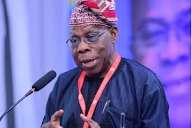
Im not going to die soon, former President, Chief Olusegun Obasanjo has said. He spoke at the marking of his 89th birthday. Obasanjo who first rule Nigeria as military Head of State later became the country’s elected President shortly after coming out from prison following his arrest by late General Sani Abacha on trumped up coup charges.
He denied online viral messages wrongly attributed to him where he was mischievously quoted as speaking about the life beyond. ‘I dey Kampe,’ Obasanjo said.
He said “For my final note in this address, I want to point your attention to the work of some never-do-well.They publish and circulate a fake paper credited to me that I am writing, giving notice of my death, pafuka.That is their wish and surely not God’s wish for me. God has assured me that He has more for me to do on earth, and He has given me the wherewithal to do it. And those who wish otherwise are going to be dealt with by God Himself. I dey kampe as usual,”
He spoke on Wednesday on “Burden and Blessing of Leadership: Reflections from Global Africa to the World” organized to mark his birthday. He was born on March 6, 1937 but there are reports that he remains uncertain of his actual date of birth which was the situation for most children born at his time.
On leadership crisis he said “Africa is not a problem to be managed but a promise to be fulfilled through honest, courageous, selfless, incorruptible and transformational leadership. By every measure of natural endowment, Africa should be a continent of prosperity, stability, peace, security and global influence. Instead, a major part of the continent remains a theatre of preventable disease and suffering, starvation, conflict, insecurity and poverty.”
He said the primary cause of leadership in Africa is the failure of those entrusted with power to lead for the people and serve them rather than against them; to build institutions rather than subvert them; to welcome accountability rather than flee from it, to ensure equity and justice rather than enthrone injustice, inequality and inequity.
He spoke further “The same young reformer who promised accountability begins to silence the press, harass the judiciary, and intimidate civil society. All institutions become perverted only to serve the interest of the leader, his family, political accomplices and business interests,” he said.
He said when he took over Nigeria as civilian President in 1999, there were great expectations even in the midst of the rot and decay left by years of military rule.
“When I was elected President in 1999, the Nigerian people had endured years of military dictatorship, economic stagnation, and institutional decay. They did not elect a president, some of them thought; they elected a miracle performer. And when the miracle did not arrive in full measure overnight — as it never can — I could hear the murmurs of some of them. This is the burden: to be elevated by hope and measured by time, often simultaneously.’
He said it was important for leaders to have principle. “True leadership requires the willingness to hold a position when it is unpopular, to say no when yes would be more convenient, to name a truth that powerful interests wish suppressed.’
He urged leaders to invest not only in teaching leaders what to do, but in forming leaders who are constituted and imbued with attributes and values to do the job the right way.
Obasanjo also reflected on the civil war which he said tested his ability to take quick decisions in daring situations. He said “The loneliness I speak of is the loneliness of final decision… your decision will affect millions of lives. That weight settles on one pair of shoulders – the leader’s shoulders,” he explained.
“I remember a few days before the Nigerian Civil War ended in January 1970. I was commanding the Third Marine Commando Division.
“My troops were positioned for the final push. Hundreds of thousands of Igbo civilians were trapped, starving, dying. On one side was the imperative of ending the war quickly to stop further suffering.
“On the other was the risk that a military advance would deepen the humanitarian catastrophe. No textbook told me what to do. No senior officer was going to make that call. It was mine alone. I made it. We saved lives by not shelling Owerri. History has rendered its verdict,” he said.