50 Years After Abuja: Journalists Lament Climate Impact on Indigenous People, Call for Action
By Samuel Ogunsona
Abuja’s Original Inhabitants, AOIs, are facing severe climate change impacts, 50 years after the city became Nigeria’s capital.
The Koro, Nupe, Gwari, Ganagana, Ebira, and Gade peoples are struggling with loss of ancestral lands, deforestation, and decreased livelihood quality.
In a workshop organised by Network of Journalists on Indigenous Issues, NEJII, on Tuesday, February 24, 2026, journalists highlighte the struggles faced by these communities, including indiscriminate rainfall, flooding, and changes in day and night patterns, affecting agriculture, fishing, and hunting.
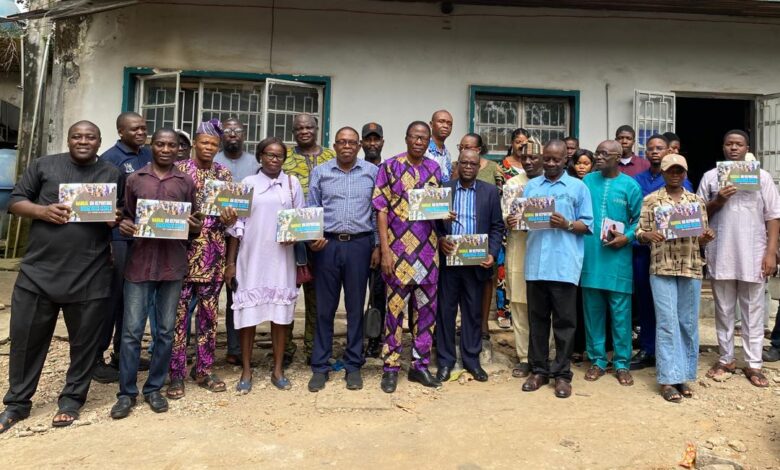
Over 30 journalists attended a workshop titled “50 Years After Abuja: Climate Change and Livelihood of Abuja Original Inhabitants,” focusing on reporting the struggles of Abuja’s indigenous communities amidst climate change.
Adewale Adeoye, Coordinator of the Network of Journalists on Indigenous Issues (NEJII), emphasized the media’s role in setting the agenda for national development and peacebuilding.
He stressed that the neglect of Abuja’s original inhabitants remains a pressing issue that needs resolution for Nigeria to be truly democratic.
He said in traditional societies, the land and the forest represent motherhood without which life would be void. ‘The air we breathe, the water we drink, the trees, the plants, the flowers, the animals, the stream, the mountains and the highlands, the plainfields and the lowlands, the entire ecosystem is the pillar on which humanity derives its being and essence. The most precious resources that mankind has transformed into various resources like the aircraft, telephone, oil and gas, solid and liquid minerals all came from the environment that we live,’ Adeoye said.
Climate change has brought about indiscriminate rainfall, flooding, and changes in day and night patterns, affecting agriculture, fishing, and hunting – the mainstay of indigenous communities.
Mr. Olalekan Adetayo, a guest speaker, noted that climate change is driven by industrialization, deforestation, and urban expansion, leading to flooding, loss of arable land, and water scarcity.
“When agriculture fails, poverty increases and that when poverty increases, migration and displacement follow. When displacement occurs, identity and cultural continuity are threatened.Climate vulnerability is therefore not only environmental — it is economic and existential,’ he said.The media practitioners promised to set challenges facing Abuja Original Inhabitants on the platform of national and regional discuss for effective institutional solutions.” He mentioned.
Emphasising on the consequences, he stressed that they are far-reaching, among them is food insecurity, poverty, migration, and displacement, threatening the very existence of these communities.
Adetayo urged journalists to go beyond event reporting and investigate the structural causes of climate change, humanizing climate stories and spotlighting indigenous voices.
The gathering called for inclusive land dialogue, climate adaptation funding, and recognition of customary land rights to ensure stability in indigenous communities and national cohesion.