Snake Bites: Here is an expert advice on what to do
Cautions against misinformation, misleading reports
By Dr Deji Osasona
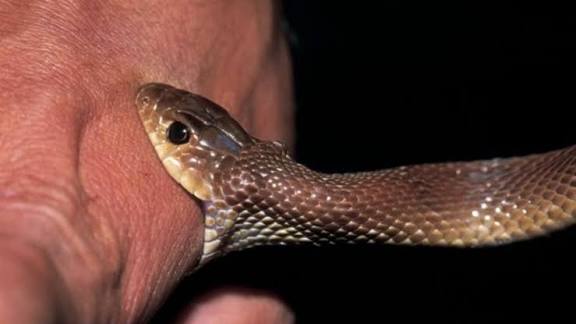
I speak to Nigerians on the trending news about snake bites, what to do and what not to do.
To say the least, some of the information being spread by people including some well known journalists are misleading and may compund the challenges of victims of snake bites.
A popular TV show recently hosted discussion on this all important issue.
I was embarrassed by the misinformation peddled by the hosts.
I advice Nigerians to endeavour to consult or do some facts-finding before going on air to spew ignorance on national TV on a professional subject they have little to no knowledge about.
I caution non-expert commentators to try to be less emotionally reactive on trending issues so that you can embrace professional facts-finding before coming on-air.
The displayed expressions of some media professionals or journalists on a popular TV show of one of the nation’s leading TV stations recently is grossly unprofessional, pathetic, and dangerous to the society. Haba!
For the purpose of public health education on the medical handling of the late female snake bite victim in Abuja (to counter wrong information by some On-air personalities & bloggers);
- It is not okay & is generally contraindicated for a medical doctor or any first-aid provider to leave a tight, arterial tourniquet on a snakebite victim to curb venom circulation.
While the intention is to stop venom spread, modern medical consensus is that tourniquets cause far more harm than good and are highly dangerous as they can cause tissue necrosis of the affected limb & amputation, concentrating Venom the affected small area, intensifying its effect on local tissue & accelerating damage (particularly with cytotoxic venoms), & lastly can cause ‘Venom Bolus’ Effect (a sudden rush of concentrated venom & metabolic waste into the bloodstream on removing d tight tourniquet after > 20 minutes, which can cause shock, severe allergic reactions, & death).
- And YES, it is not only okay but often life-saving for a medical doctor to administer intravenous (IV) fluids to a venomous snake bite victim.
IV access is a critical component of emergency, supportive care to treat shock & low blood pressure or cardiovascular collapse resulting from d venom by helping to maintain perfusion to vital organs; to manage third-Spacing (‘leaking’ of fluids into tissues) in severe venomous bites (e.g. vipers) that causes significant inflammation, resulting in severe edema; & to prevent acute kidney injury from hemotoxic and myotoxic venom that can lead to rapid kidney failure. Proper hydration helps to maintain d urine output & protect the kidneys.
Also, it’s the same IV lines that will be used in administering d antivenom (which the hospital claimed was given) & is usually diluted in 500ml of saline or 5% dextrose and given over 1-2 hours (as its not given by a direct IV push). In fact, speedy setting of an accurate IV line in such cases can make a difference.
Lastly, is it possible for a venomous snake bite victim to die despite the given anti-venom? YES!
The prognosis depends on the right anti-venom being used (because it works specifically for the type of snake involved), the extent of venom circulation before the administration of the antivenom, especially if there was no immobilization of the bitten body part, and the duration it took to get the medical help (in the case of this lady, it took more than 1 hour to even leave for the 1st hospital, based on the neighbour’s testimony online) which means that lots of the venom would have binded to tissues and cells, and no longer in free circulation in the blood (and the anti-venom mainly works for the circulating venom), etc.
And to think that some On-air personalities tied their medical ignorance to the perceived ‘any-howness’ culture of Nigeria and healthcare system in 9ja, without realizing they were demonstrating the exact manifestations of the ‘any-howness’ they condemned is tragically comedic.
And again, for the purpose of public health education on snake bite venom and first aid measures, here are some helpful facts & thoughts of mine:
- The first aid measures taken within the time of snake bite and less than 1 hour matters. Immobilization of the bitten body part and preferably keeping that body part lower than the heart level, appropriately bandaging (not tying with tourniquet) at the right body location, avoiding panic in order not to accelerate the heart pumps to fasten d venom circulation, etc are key to survival before the main medical intervention of antivenom arrives is key.
However, in the unfortunate case of the late snake bite victim, most of these measures were likely not taken as I gathered from an alleged neighbour’s online testimony that she even took herself to d hospital via a cab, after over 1 hour of the snake bite at home, as neighbours were said to be busy looking for the snake. In fact, the same neighbour in the IG video said she even had to walk a distance holding the bitten hand before getting the cab ride, after they couldn’t get a neighbour’s car to use. Now over 1 hour delay in a case of a venomous snake bite + moving around without immobilizing the bitten part is a bad prognosis already because of the neurotoxins/haemotoxins and cytotoxins circulation depending on the snake type that would have started paralyzing the muscles and nerves, thus affecting the breathing, etc. So, permit me to posit that though an effective anbulance system that can be called upon would have helped, but the ignorant Nigerians happened to her more than Nigeria happened to her!
- Social media noise about the hospitals not doing enough or causing her death is just emotional vituperations borne out of the pain of the loss but devoid of logical reasoning and loaded with medical ignorance. If you want to know what the emergency response care the 2nd hospital did, please look for their press release to read. And again, the hospital noted that the anti-venom was given.
In fact, its typical of Nigerian social media space that cares less about the real truth of what happened at a hospital, but cares more about the trend as long as a popular blog or celebrity has posted it. While I concur that d 9ja healthcare system needs to be upgraded, but that doesn’t validate most of the 9ja social media noise.
- There are snake anti-venoms available in some hospitals in Nigeria (including Abuja) with d right cold-chain storage system. And yes, it’s only available in some or perhaps a few hospitals, not all as it’s practically impossible to have it in all hospitals – no nation on earth can boast of having it in all their hospitals because of some technical factors. So, all those social media noise of no antivenom in the whole of Abuja is BS!
In fact, it’s also untrue that lack of constant power supply made it difficult to have the snake bite antivenom as it is now commonly available in a freeze-dried (lyophilized) powdered form, which is designed to be reconstituted with sterile water for injection or an isotonic saline solution (such as 0.9% NaCl/D5W). This is often preferred in tropical or remote regions like 9ja because this powder form is more stable at higher ambient temperatures and has a longer shelf life (up to 5 years) compared to liquid, cold-chain-dependent alternatives.
- Activated charcoal will not help a venomous snakebite. The only effective treatment for envenomation is antivenom. So, please cut of the cock and bull story about activated charcoal circulating online – thats more for ingested bacterial or food poisons.
- The snake bite anti-venoms vary depending on the type of snake as it works for each specific type of snake. Thats why we have monovalent (antivenom for one type of snake) and polyvalent (for multiple types of snake), but the ogbonge brands of this latter are quite costly – more than 90% of Nigerians will struggle to afford it in d case of a poisonous snake bite. A vial of some brands for instance can cost between 60k – 180k in naira, and a doctor would often have to administer a minimum of 3 vials intravenously to neutralize d venom depending on d severity (sometimes, up to 4 – 6 vials may be needed).
Na where we need d FG & SG to subsidize d cost in a PSP arrangement, and make it available in at least one health centre in every snake bite-prone town/at least in every snake bite-less prone LGA, though other factors come into play as its costly and not a regularly used medicine for areas not frequently prone to snake bites. It also has a narrow shelf life (that is can easily expire without being used) if its not the dry form. This makes it unbusiness-like for a private health centre to store it even if they have 24 hours power supply.
- Lastly, I sure want to concur to some viral posts on the consideration for the integrative approach to snake bite treatment in 9ja to aid our overwhelmed healthcare system – with the traditional medicine approach, I’m aware there are leaves like neem, etc that can be chewed to lessen d impact of the snake venom on the muskuloskeletal and central nervous systems, but no data to back up whether its the leaves that worked or not because majority of snake bite is non-poisonous, and even the poisonous snakes don’t always inject venoms during a bite. So, if there was no injected venoms during the snake bite, how can we ascertain that the herbs used or ingested neutalized the venom, especially when it takes time for ingested nutrients to reach the blood circulation.
Also, there is this black stone that I’m aware can be put on the hygienically cut surface of a poisonous snake bite to kinda suck out the venom to a large extent till the black stone falls off from the bitten body part. Even though, I grew up seeing this yield result in some cases during my dad’s pastoral days in some rural areas of Kwara and Kogi states, I however also know that the medical consensus is to avoid cutting open the bitten surface, and no enough data to categorize the impact of the black stone on a venomous snake bite as against the non-poisonous ones.
RIP to the beautiful soul of the lady and may God strengthen her family & friends through this grief.
God bless Nigeria!
Dr Osaz
Lagos.