Over 150million tourists attend Yemoja festival in Brazil yearly, says Envoy
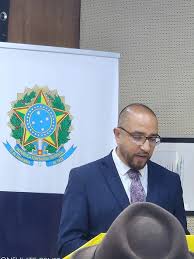
Speaks on why he worships Sango, the Yoruba god of thunder
Ongoing Yoruba House project in Brazil
The diplomatic relations between Nigeria and Brazil was launched in 1961. After Nigeria, Brazil is the country with the largest population of black ancestry with more than 100m people of African, mostly Nigerian descent. For decades, the two countries have explored shared economic and cultural history. In this Interview, the Acting Consul General, Ronaldo Vieira spoke with Adewale Adeoye and Samuel Ogunsona on trade, economy, Orisa worshipers and the renewed cultural and economic ties between the two countries.
Question: Since you came as the new Acting Consul General of Brazilto Nigeria what has been your experience about the people?
Answer: Thank you very much for the question. It is my second time in Nigeria. Between 2021 and 2023, I was the Deputy Ambassador of Brazil in the Embassy in Abuja. During that time, I learned a lot and I got so interested in Nigeria that I decided to take a PhD course. My thesis was on Brazil-Nigeria relations which I successfully completed last September almost one year ago. And, I believe, that after I presented my thesis, I was invited to take charge of the Consulate in Lagos. So, it’s been almost two months I have been here, but I’m not so new to Nigeria.
When I came, a crowd of people welcomed me here. And I’ve been working very much on the basis of this network that I have built along the years. Because you can consider that from 2021 up to now, I haven’t walked away from Nigeria because after my term in Abuja, I went through studies and now I’m back here at the Consulate of Brazil in Lagos.
Question: Your Phd thesis on Nigeria-Brazil relationship is interesting. What were the striking things you discovered?
Answer: Well, you know those theses, you need to select all academic work, you need to select your objective, so you cannot really study everything. So, I did a historical study of the Brazil and Nigeria relationship since 1961. But my research was more on the impact, the role and the presence of the second dimension of politics in Nigeria which is the traditionalists, the traditional monarchies. I think this is something that most scholars haven’t studied when they do international relations because officially, the countries are linked through their formal ties. We deal with the official government, and you know that the traditional governments of Nigeria are not part of that particular system. Despite of that, I have realized that traditional monarchs have great impact in promoting the economy, in promoting cultural exchange, and also in promoting political ties because they have access to the formal presidency. And this is a knowledge that I experienced in Abuja that is very important and most scholars were not aware.
Question: What about the cultural aspect in your findings?
Answer: Well, there are two points on the cultural aspect. This is part of what we are trying to implement here. Our cultural (in Brazil) ties are more linked to a small part of Nigeria which is the Yoruba, but not the entire group of the Yorubas. Our links are with the Yoruba who are traditionalists. So, The link between Brazil and Nigeria is mostly the Orisa worshipers and Brazil for instance was not aware of that. In Brazil, It’s common that people think that the entire country worship Orisa. So the cultural aspects that I found was very interesting to argue in my research to highlight how diverse Nigeria is with 371 ethnic groups, according to some official sources because it’s not a number that you can say it is the final because there are lots of research that Nigerians need to consider.
Another thing I also noticed culturally is that most of the books that make reference to Nigeria are written by foreigners in developed countries. And most of the studies lack field studies. I checked with some researchers who have some knowledge about Nigeria and I realized that none of them have traveled to Nigeria. So, how come if you don’t do field research, you can just trust (all) the reports of the International Monetary Fund, (IMF) or the World Bank or the United Nations, (UN) agencies. We have to be more careful about that. The greatest finding on cultural aspects is to highlight that Nigeria is a very important country in Africa and Nigeria has one of the most diversified cultures and those cultures are not new, they go back 3,000, 4,000, 5,000, 6,000 or even 10,000 years. Maybe they changed their names, but they were there. What was striking for me was the cultural diversity and how strong the different cultures are preserved, their values and the knowledge.
ORISA AND YEMOJA FESTIVAL IN BRAZIL
Question: you are talking about culture, which are the strongest Nigerian cultures in Brazil that remained immune from Western civilization? For instance, you have Sango, you have Iyemoja.
Answer: Thank you very much for asking me that question. And it is much more complex than we think. Recently I read a report from a Brazilian institution that does statistics. And we discovered that among the Orisa worshipper, 60% are not black. And most black people in Brazil are, in fact Christians. So, 60% of the Orisa worshipers in Brazil are actually not black.
I will not say that they are white because this discussion of black and white might work well between Nigeria-European countries, but with Brazil it is very complicated because we are mixed. I give you an example, we have two words in Brazil for black. We have black and nigger (negroid) and according to the official classification of the ethnicity of people, I don’t fall in the group of blacks but I fall in the groups of niggers (negroid). I know nigger doesn’t sound a good word in English so maybe the translation is not correct but if it is black, the word in Portuguese is preto and the other word nigger is negro. I fall into the category of negro but I don’t fall into the category of preto, so I am an African descendant.
I am of mixed race. All mixed-race people come in the same group of the negros. And pretos are the ones, the Africans who moved to Brazil and didn’t mix with white people or indigenous people of Brazil. This is also something very interesting that Nigerians don’t know about. Maybe because most of our interactions come from the white business people coming to Nigeria and you don’t see many blacks (from Brazil) in Nigeria and also probably you’ve never seen the indigenous people of Brazil.
Question: Can you tell us more about indigenous people of Brazil?
Answer: The history was very difficult. I don’t want to go into details now because our focus , but in another occasion, we can talk about it. We have more or less 2 million original people of Brazil. Most of these people don’t speak Portuguese and they live in, I wouldn’t say secluded societies, but they have independence in their settlements. Obviously they interact with urban people, they can use the official documents of Brazil, but they are not obliged to use the documents. So, like you have the NIN in Nigeria, the original people of Brazil don’t have to go and look for any kind of these documents. But if they want, they can. Most of them don’t speak Portuguese. Now, the University of Brasilia has done a great job for the past 30 years. The University of Brasilia did the research to describe the languages of the original people of Brazil. At the moment, they have in their database 191 languages. This is very new because when I was at school, when I was little, I didn’t get any information on the original people of Brazil. And now this discussion is coming out. I believe it is like this for many.
Thanks to the Black Movement of Brazil, because since 1989 with the constitution of democracy in Brazil, there has been a lot of work, researches on the empowerment and emancipation of the black people of Brazil.
Before, we didn’t have much studies on the condition, the situation, the history of the black people of Brazil. These studies were carried out and I believe that the Black Movement of Brazil brought together the strength for the original people of Brazil to fight for the right of existence because writing and studying a culture is bringing it into existence because people don’t know, if you don’t write, if you don’t talk about it, isn’t it?
Question: How will you describe the strenght, of for instance the traditional worshipers in Brazil, in terms of the population?
Answer: The biggest festival in Brazil is actually related to Orisa. It’s related to Yemoja. It holds (yearly) on the February 2. More than 150 million people go to the seaside for the festival. We have more than 150 million people. Brazil has more than 8,000 square of coast line. All the coast lines are filled with people who come for the festival. The festival doesn’t last long. It’s one day.
It starts in the morning with the sunrise and closes by night. What is interesting is that, although we have only two million worshipers of Orisa, we have this huge amount of people who come to celebrate Yemoja. And in our syncretism, Yemoja is related to the mother of Jesus, Mary. Mary is very much appreciated in the Brazilian culture. So, I believe that syncretism is the one that brings people together for the festival. For some, the festival is really religious but for most of Brazilians who come to the event, it is a cultural manifestation. This one is more Brazilian. For the carnival you get people coming from all over the world. The Carnival is the second largest festival of Brazil. If you search the carnival in Brazil in Rio de Janeiro because we have more than 50 different types of carnival during that period.
I’m going to talk about the one that you might know , the carnival in Rio de Janeiro. It works as a championship, same as football. So, they have, if I’m not wrong between 14 and 16 teams, but for the carnival we call them the school of Samba. It’s between 14 and 16 School of Samba and they compete in the parade. So, there would be for two days between midnight and 7:00 in the morning. Parades of the School of Samba with judges and I believe in that one, you have a million people participating and it is televised worldwide.
And on the third day, only the champions will go back to the avenue for the parade. And there is a specific avenue they built in Rio de Janeiro. The same as you have stadiums. We have some Sambodromo. . it’s very similar to a stadium.
WHY IM A SANGO WORSHIPPER
Question: What is the future of Sango worshiping in Brazil and what inspired you as a person to be Sango faithful?
Answer: Well, it came as a personal development. I was brought up in a very strict Christian family. So, at the age of four I was already reading the Bible. I started reading and writing very early in my life. My family saw me as a potential religious leader. I was moving along with them and I did many different studies of the Bible. I also researched the Qur’an and other religions. At some point, something clicked in my mind and this is very personal. I was brought up by my white family. Unfortunately, my father who was black was late when I was about 4 or 5years old. For some reasons, I was adopted by a white family. I lost my ties with my blackness. So, it was only when I entered the university that I got in contact with all these studies by the Black Movement of Brazil, Pan-Africanism and black literature. It clicked in my mind that I had no reference whatsoever about my blackness, about my Africanness.
I thought I needed to look at this. Where I come from the Sango worshipers, most of them, are black. I started connecting with them. I felt so great about it, little by little, I started studying it more. There are some ideas of Christianity that don’t fit me. When I looked at the Orisa thing, I realized that the Orisa are not God, apart from Olodumare. They (Orisa) are not saints either. They are energies of different parts of nature. The whole philosophy of the Orisa, at least in Brazil is we are all parts of the same nature. We need to integrate ourselves again. I thought that philosophy was so beautiful that I started researching even more.
Then I discovered that the Yoruba civilization is strong and much older than we think. While in Brazil, people who are not from the old community think that this is primitivism, this is ignorance. I found that the basis of the Greek philosophy in the Yoruba history that came much before the Greeks. The way the Yoruba people did their monarchies with the council of the elders, this is democracy. This is the beginning of the studies of democracy. But people didn’t know much about it. That was why I decided to research more. Now I’m studying it and I’m studying Yoruba language. I’ll try to learn it and maybe translate some of the books on that beautiful culture to the Brazilian society. For me, personally, as a worshiper of Sango, I’m not related to any religion. I don’t think shrine is a church. I don’t think shrine is a religion. For me, it’s just the place you go to connect yourself with some energies. Sango is the energy of thunder. There are another beautiful things about the Orisa. This is really a personal question you ask me. I was not expecting that, but as you ask me, I’m going to release another beautiful aspect of the Orisa. The Orisa shrines don’t have rules to enforce. They just say they give you guidance. All this mentality that we live around sins, we are sinners, we have to be careful, we are sinners. I think this oppresses us too much. I don’t see that in the shrine of Sango. I go there only for the mythological knowledge to get the lessons. But the priests or the leaders of the Shrine, don’t come to me and say, “Don’t do this. You have to do that.”
This imposition of morality, no. They tell you a story. You learn from it. This I think is deep rooted in the Yoruba civilization. To allow people to learn with their own capacity because people are different. When you tell me a story, I will get one result. You might get a different one. And that is how we are a different people, learning how to live in this world.
Question: Do you think there’s adequate relationship between Yoruba traditionalists and those in Brazil? Is there any effort to build that gap to bring them together in a synergy?
Answer: I don’t think the synergy is explored to the full. I don’t think the relationship is institutionalized and I don’t think the relationship has a system behind it. I have to say that there is a lot of homework to be done at the Nigerian side, by the Yorubas. And there is a lot of homework after the Yorubas start.I am not the only one who moved to Orisa in search of my blackness and search of my Africanness, history. Many Brazilians are doing this. You have to remember the conditions in which the Africans moved to Brazil. The system was very cruel. As soon as the enslaved people arrived in Brazil, they were stripped off of their names, of their clothes, of their culture, their history, and of their families because no brothers and sisters (were allowed) could be together. They would be sold to different people. And even they could not gather together in the same language. The traders of enslaved people would be very careful not to put the same community who would speak the same language working on the same farm. They wanted to destroy everything. There was no record. That is why I don’t know from which background is my black blood. This happens to everybody in Brazil. You understand? And it doesn’t happen with the descendants of Lebanese,Italians, the Germans who live in Brazil.
The situation is very much more delicate. I am not the only one who turned into the Orisa worshiping. This is one way of going back to our roots. It’s our way to bring back our Africanity. Now, I consider myself an activist of Africanity in Brazil. I’ve already served in Mozambique, in Kenya, in Tanzania. Then I came to Nigeria in Abuja, now I am in Lagos. And my idea is to feel all my career mostly at least in the African continent with African countries.
Probably,I hope in 20, 30 years, I can say that I am a real Africanist because all the Africanists I know in Brazil, they know one, two countries. So how come if you know South Africa, you specialize in South Africa, you can say you’re an Africanist.?
How come? Tell me. How come if you specialize in Ethiopia? You can you can call yourself an Africanist. And I think there is this other mistake. There is a book I’m about to launch in Brazil. Very interesting. I’m writing it together with two scholars. One is a black man, a Professor of International Relations in the University of Brazilia and the other one considers himself white, a white historian who specializes on the history of slavery in Brazil from the University of Minas Gerais.
The book is simply to discuss the word Africa used and circulated in different context in Brazil. We check the political texts, we check the media texts, and we create this big discussion. What is Africa in Brazil? What does Brazil think and feel Africa is? Is Africa a synonym of a continent or a synonym of a country? Maybe I we also question is Africa an imaginary space in the Brazilian society?. Maybe Brazilians don’t look at Africa in as a real thing. Maybe the Brazilian society look at Africa in their imagination. So, this is what we’re trying to discuss. The name of the book is Africa Brazilian Debate. I think it will be launched in January, but I’ll let you know.
BRAZIL HAS 16 ORISA
Question: Now, let’s talk about the Sango Festival. What is Sango Festival? How is it? Is it also a very popular festival in Brazil?
Answer: We only have the Yemoja festival. For Sango for instance and for any other Orisa, I have to say that in Brazil the Orisa system was recreated. So, we don’t have a shrine for one Orisa. We have a shrine for 16 Orisa. So, they decided, I mean the Black Movement of Brazil decided that they would have this shrine with 16 Orisa. The first Orisa to be installed inside the shrine was Sango. It was installed in the center. All the other Orisa are in different places of the shrine. What they have is festivals of that particular shrine. You don’t have a collective festival. Let’s say we might have nowadays 5,000 shrines in Brazil. So, all of them have small festivals. People come to their shrine. You understand the difference? But as a big festival, it is only Yemoja. In Portuguese, we don’t call it shrine because it has the 16 Orisa, we call it Candomble.
Question: Is there any effort to institutionalize the cultural history between Yoruba and Brazil? I’m thinking about something like Museum of Yoruba-Brazil history.
Answer: Yes, the Orisa community in Brazil have some connections and they are trying to get more connections with Museumlogists in Nigeria, Togo and the Republic of Benin and Ghana to develop our Afro museums. We don’t have many Afro museums. What we might have that I remember now is seven. But I haven’t traveled all over Brazil. From my own experience, I know only seven Afro-Brazilian museums. And inside the Afro-Brazilian museums, we have Yoruba sections, because the Orisa history really drew the attention of the Brazilian society.
But now, I know there is a movement for creating one Yoruba Museum in Brazil, which goes beyond the Orisa. It’s more related, deep rooted in the Yoruba civilization. There has been some negotiations and discussions for the past three years.
The leader was initiated in Sango. She’s leading this project on the Brazilian side. There have already been donated 20,000 square meter blocks in Salvador City to build this museum. So, now what they are asking the me is to link them as much as possible to researchers, the academics of the Yoruba culture. This has been difficult to source, if you could help.
Question: There is a Brazilian compound in Lagos called Popo-Aguda.
Answer: Yes, I know. I’m aware of that. Yes.
Question: Have you been there?
Answer: Not yet, we are organizing a visit to them.I don’t want to arrive there by surprise. We are organizing this visit because I believe it is important for them as well that I come around and talk to them. We are organizing this visit and we’re going to be doing this in the in the next few weeks. We’re waiting for them to give a date for us to visit them and have a proper conversation.
ECONOMY AND TRADE BETWEEN NIGERIA AND BRAZIL
Question: What about the in terms trade in the relationship between Nigeria and Brazil? What are the potentials?
Answer: We have a history of trade that was very big in numbers but very short in portfolio, our trade was basically around oil, the oil sector, for some time by the end of the 70s and beginning of the 80s. We tried to diversify our portfolio of trade with Nigeria. We were very successful, but this movement didn’t last more than four years, unfortunately.
My idea nowadays is to bring back that movement (trade) which once was big. We have a lot of work before us. It’s not just about bridging the business people between Brazil and Nigeria, but also, we need to discuss, we need to develop a new mechanism of trade. I think one other aspect I’m looking at is to attract more Brazilians for exploratory missions in Nigeria. I think this is the best time for us, for the Consulate to deploy this activity. I’ve been contacting many Brazilians in the private sector. I’ve been talking to them on one-to-one basis, explaining to them. This is is more my work, talk and talk to convince them to come to Nigeria. If they are curious, let’s say, the northern part of Nigeria, my idea is to go there with them. If its in Delta, let’s go together and see and talk to people. For that, we are a very small team here, but we are trying to attend the high-level meetings and the high-level events in Nigeria.It’s not just the Nigerian business people but also the traditionalists. I have just visited the 5th anniversary of the Olu of Warri. I am fully aware that this connection with Nigeria needs to go through the second dimension of the politics in Nigeria which is to talk with the traditional people.
DRUG TRAFICKING BETWEEN NIGERIA AND BRAZIL
Question: Some Nigerians transfit illicit drugs from between Brazi and Nigeria. Are the two countries working together to tackle the problem?
Answer: Yes, thank you for the question. You make me remember the work we did in Abuja when I was the Deputy Ambassador. We knew that for us to fight narcotraffic, we needed to put our two police to work together.
At the moment, the Brazilian Federal Police in Abuja, who are working closely with the police of Nigeria on those particular issues. This for me, is a victory because the ongoing discussion to bridge those two police lasted more than four years. Now they are finally working together. They are exploring understanding, of exchanging information and working together. There is another thing Embassy is doing in facilitating the national police of Nigeria and the national police of Brazil to cooperate on the Interpol level. All those bridges are very well established now. And obviously the military (Brazil and Nigeria) have been together for years. For the narcotraffic, they are already working together.
FOOTBALL
Question: What is happening to Brazil football? Brazil haven’t won the World Cup for a long time. What do you think? What can Nigeria learn from the greatness of Brazil in terms of football?
Answer: You see, I think the problem why Brazil is not winning, I cannot say much but what I can say is probably the challenge in Brazil (football) is the same as you face here. It’s not the football player. We don’t win a World Cup with a player. It’s not a player that make the match. I think Brazil needs to rethink, readdress the system of the national team. I don’t know. This is my personal opinion. We have very good, excellent players. This is a new challenge, because in the time of Pelé, the players would play as a team. Maybe we should look back in our history and learn from our elders.
Question: When is the next major festival in Brazil?
Answer:
The problem is, now Brazil has become a hub of festivals, but not (all) cultural festivals. So, there are more than 100. It’s complicated for me to say when is the next one. But for me, the next one I will attend is the Yemoja which is next year February.