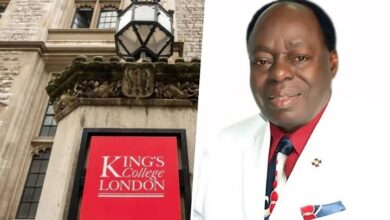
Former Bayelsa Gov., Seriake Dickson is Yoruba from Ijebu, says Reno Omokri
“I dont hate Igbo”
By Omolade Adegbuyi
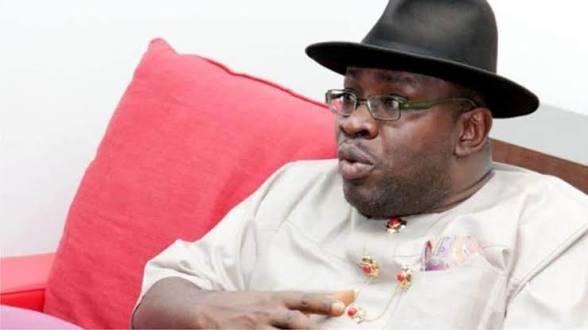
Former Governor of Bayelsa State, Seriake Dickson is a Yoruba man from Ijebu, Nigerian Ambassador to Mexico, Reno Omokri has said.
Ambassador Omokri said Dickson’s parents were Ijebu traders who went to Izon land to trade several years ago.
It is a well known fact that Dickson comes from the Ijebu royal family of Fidipote Ruling House of Ijebuland.
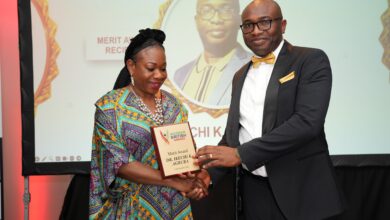
Dickson himself had admitted this when he formally visited the palace of the late Awujale of Ijebuland, Oba Sikiru Adetona, in Ijebu-Ode to rekindled his maternal lineage.
Nothing has been said about his being a full-blooded Yoruba man until now.
Omokri said the Ijebu have been trading with the Ijaw for centuries.
He said many prominent Ijaws are actually Ijebu.
“For example, former Bayelsa Governor and now NDC National Leader, Seriake Dickson, is actually an Ijebu man. He is from the Awujale’s palace. His family went to trade in Izon land 200 years ago and never returned. Please fact-check me.”
He said for hundreds of years, the Ijebu sold a fabric known as Aṣọ Olona to the Ijaws.
“The Izon (Ijaw) renamed it Ikaki. Only in the 19th Century did the Ijaws in Ndoki resell Ikaki fabric to Igbo women from a village called Akwete.”
Omokri said “Those women began making a version of Ikaki, which the Igbos called Akwete cloth. Google it or use an AI you trust. Akwete is a replica of Aṣọ Olona, and Aṣọ Olona was influenced by Aṣọ Ofi, which the Ijebu bought from the Oyo Empire.”
Speaking on his relationship with Igbo, Omokri said “I most certainly do not hate Igbo people. I love Igbos. Don’t you see how handsome and beautiful Igbos are? Who in their right mind would detest a people of such pulchritude, especially when combined with industriousness? Igbos are a major asset to the Black Race.”
He said he hates no one.
“My life’s purpose is to promote peaceful religious and regional coexistence. And if you talk in terms of my charitable activities, no Nigerian ethnicity has benefited from my philanthropy as much as the Igbo. And why would I give my daughter an Igbo name if I hate Igbos?”
Omkri said since childhood, he has been wearing these clothes.
“My first birthday photo, taken when I was presented to my grandmother’s sister in Ode-Itsekiri (Ale Iwere), was in Aso Oke.
“My parents were conscious people who believed in Africa and Nigeria. And the reason I wear a lot of Northern clothes (not Awusa, as you put it) is that my father, though from Delta State, more or less became a Northerner, and the apple does not fall far from the tree.”
He said he has made a vow to wear only authentically made-in-Nigeria clothes made entirely from Nigerian fabric.
“Agbada made from Aṣọ òfi (AKA Aṣọ òkè) fits that mould. Babanriga made from Kaduna textiles also represents that consciousness.
“Even the Kemije that my people, the Itsekiri, wear, I don’t wear it. The reason is that it is not authentically Itsekiri culture. It is a British sailor’s uniform that we copied. Even the fabric is not of Sub-Saharan African origin.”
He said the reason the Izon (Ijaw) call a Kemije Etibo is because it was sold for eight bo (also sometimes spelt Beau or Bow) by the European sailors. A bo is an old form of currency.
“Much as I love the Igbo people, Isi-Agu is not authentically Nigerian. It has nothing to do with Nigeria.
“Please fact-check me: Isi-agu originated as a colonial-era upholstery material for chairs and curtains. It is still used today in the poorer parts of the world.”
He said at one point, he wanted to wear Akwete cloth to be more pan-Nigerian but he found out that Akwete cloth is actually of Ijebu origin.
“You can read about it in the British historian John Gillow’s 2003 book, African Textiles: Colour and Creativity Across a Continent.”
Omokri said the word Aṣọ òkè is of Ijebu origin, meaning that they went òkè (upcountry) to buy the Aṣọ, hence Aṣọ òkè.