Stiffled Voices: Threats to a 19-Year-Old Environmental Activist
By Samuel Ogunsona
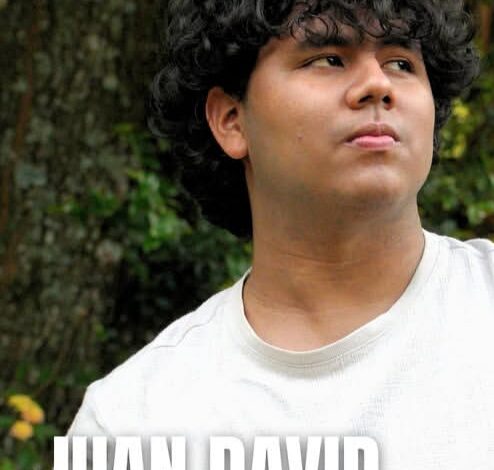
“Defending our territories should not cost us our lives,” Juan David Amaya echoes the harsh reality faced by environmental rights defenders in Colombia.
He is a young climate justice activist.
He has been forced to confront the dark side of advocacy.
19-year-old Amaya organizer at Viernes Por el Futuro (Fridays For Future) Colombia and co-founder of Life of Pachamama, has been receiving death threats for his tireless advocacy for environmental justice.
Amaya’s activism has taken him to the forefront of the climate justice movement in Colombia. As a scholarship holder of Diploma in Climate Change and Human Rights of the Yale School, he has become a vocal advocate for the implementation of the Escazú Agreement, a regional treaty that seeks to protect environmental defenders and promote access to information and public participation.
But Amaya’s work has not gone without consequence. On January 12, 2026, he received a death threat near his residence, a stark reminder of the risks faced by human rights defenders in Colombia. The threat was directly related to his work defending life, territory, and the environment, particularly in regions with large hydrocarbon reserves.
“I believe this threat is a direct consequence of my work defending human rights and the environment over the past several years,” Amaya said in an interview with Irohinodua. “In particular, it is connected to my efforts to promote the implementation of the Escazú Agreement, especially in relation to access to information, public participation, and the protection of environmental defenders.”
Amaya’s work highlights the socio-environmental conflicts that impact vulnerable communities in Colombia. He has been a vocal critic of the extractive industries that threaten the country’s biodiversity and the rights of indigenous communities.
“The threat I received is directly related to my work defending life, territory, and the environment and I am currently in one of the regions with the largest hydrocarbon reserves in Colombia. In this territory, speaking about climate justice, energy transition, and environmental rights represents a risk in the face of powerful extractive industries.” He explained.
Silencing the Voice of Change
Amaya’s story is not an isolated incident. Human rights defenders in Colombia face real and persistent risks, and the State’s response has been inadequate. The lack of protection and justice for environmental defenders has created a culture of impunity, where threats and violence are used to silence voices.
Colombia remains one of the deadliest countries for environmental defenders, with 79 reported killings in 2023, according to Global Witness. This accounts for nearly 40% of the 196 total defenders killed globally that year. The country has seen a persistent trend of violence against environmental activists, with extractive industries and systemic failures contributing to the risks faced by defenders.
Online threats and harassment have also become a significant concern for environmental activists. A report by Global Witness found that 92% of land and environmental defenders surveyed experienced online abuse, which can lead to offline harm, including harassment, violence, and arrests. Women activists are disproportionately affected, facing sexualized threats and harassment.
“Death threats against anyone voicing their opinions are absolutely unacceptable. Every individual has the right to life, liberty and security, and no one should be subjected to death threat that undermine these fundamental human rights” Olusola Oludiran, a Nigerian human rights activist, shares his thought with Irohinodua.
Call for Protection
Despite the threat, Amaya remains committed to his work. He has formally reported the incident to the Attorney General’s Office of Colombia and the National Protection Unit, but nearly a week after the event, he has not received any official response or protection.
“The lack of institutional action increases my level of risk and vulnerability,” Amaya said. “I want the message to be clear: defending our territories should not cost us our lives. It is urgent for the State and the international community to recognize the seriousness of this situation, activate real protection mechanisms, and ensure the full implementation of the Escazú Agreement.”
As the international community looks on, Amaya’s case serves as a stark reminder of the importance of protecting human rights defenders and promoting environmental justice. The Colombian government must take immediate action to ensure Amaya’s safety and the safety of all environmental defenders in the country.
In the face of adversity, Amaya remains resolute. “I am not alone,” he said. “Other young people and defenders within my organization and in this region face similar risks, and their voices and safety must also be protected.”
Colombia remains one of the deadliest countries for environmental defenders, with 79 reported killings in 2023, according to Global Witness. This accounts for nearly 40% of the 196 total defenders killed globally that year. The country has seen a persistent trend of violence against environmental activists, with extractive industries and systemic failures contributing to the risks faced by defenders.
Online threats and harassment have also become a significant concern for environmental activists. A report by Global Witness found that 92% of land and environmental defenders surveyed experienced online abuse, which can lead to offline harm, including harassment, violence, and arrests. Women activists are disproportionately affected, facing sexualized threats and harassment.
According to a report by the Climate Watch, sighted by Irohinodua, Amnesty International has expressed deep concern over the threats against Juan David Amaya, stating that the organization calls on the Attorney General’s Office of Colombia to conduct a prompt and thorough investigation into the matter.
“We express our concern over the threats against the young human rights and climate justice defender Juan David Amaya. We call on the Attorney General’s Office of Colombia to conduct a prompt investigation and on the Ministry of the Interior and the Mayor’s Office of Villavicencio to provide effective protection measures.”
Amaya’s story serves as a powerful reminder of the human cost of environmental activism. His bravery in the face of danger is an inspiration to a generation of young people fighting for a more just and sustainable future.