
Requeim for Modern Father of Cardiology, Prof Braunwald
By Abraham Ariyo, M.D.
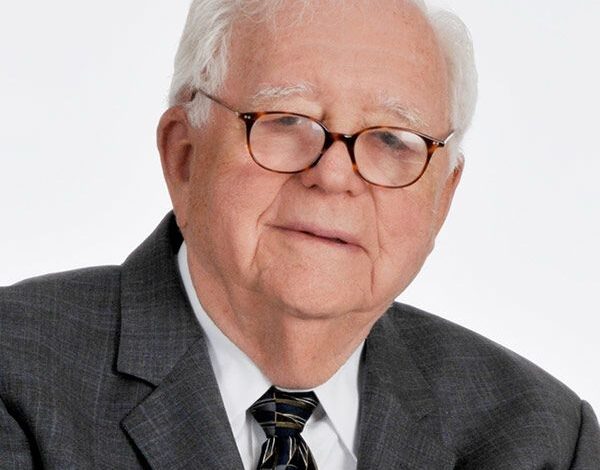
Dr. Eugene Braunwald was the Hersey Professor of Medicine and Chairman of the Department of Medicine at Brigham and Women’s Hospital and Harvard Medical School. During my fellowship at Harvard in the 1990s, he was not only my Chairman but also a profoundly influential mentor.
Born on August 15, 1929, in Austria, Dr. Braunwald fled Nazi-occupied Europe with his family and arrived in the United States as a refugee. From these humble and perilous beginnings, he rose to extraordinary prominence in cardiovascular medicine. He passed away on April 22, 2026, at the age of 96.
At the time of his death, Dr. Braunwald had authored more than 1,800 scientific publications. He was the most cited author in cardiology and among the most cited scientists worldwide. Notably, he became the first adult cardiologist elected to the United States National Academy of Sciences and was widely regarded as a leading candidate for the Nobel Prize in cardiology.
He served as editor of two of the most authoritative medical textbooks: Harrison’s Principles of Internal Medicine and Braunwald’s Heart Disease, both of which remain foundational resources worldwide.
Dr. Braunwald earned his medical degree from New York University School of Medicine in 1952, followed by residency training at Johns Hopkins Hospital. He married Nina Starr Braunwald, his medical school classmate and a pioneering cardiac surgeon. Initially drawn to engineering—particularly pumps and magnetism—he ultimately chose cardiology, the medical discipline most closely aligned with those interests.
In 1954, he published his first work and continued for the next 7 decades. In 1959, alongside Dr. Morrow, he described hypertrophic cardiomyopathy as a distinct clinical entity, a condition now known to be associated with ventricular arrhythmias and sudden cardiac death in young athletes. This work contributed to the development of screening strategies in competitive sports.
In 1962, during his tenure at the National Institutes of Health, Dr. Braunwald and colleagues introduced the measurement of ejection fraction, now the gold standard for assessing ventricular function and classifying heart failure.
By 1970, in collaboration with Dr. Pfeffer, he advanced the use of angiotensin-converting enzyme inhibitors in the management of heart failure following myocardial infarction, significantly improving patient outcomes.
Among his most enduring contributions was the concept “time is muscle.” Through meticulous experimental work, he demonstrated that myocardial infarction evolves over hours rather than occurring instantaneously. This insight established the critical importance of early reperfusion in salvaging ischemic myocardium and reducing mortality.
In 1984, he founded the Thrombolysis in Myocardial Infarction (TIMI) Study Group at the Brigham, leading more than 60 landmark clinical trials. These investigations were instrumental in the development of thrombolytic therapy, early reperfusion strategies, and contemporary interventional approaches, including stent-based treatments.
Over the course of his career, such advances transformed heart disease from a frequently fatal condition into a largely manageable chronic illness.
Dr. Braunwald once predicted that within 50 years, heart disease could be significantly controlled and potentially displaced as the leading cause of death.
Reflecting on his remarkable journey, he stated, “I was in the right place at the right time, with the right collaborators, the right mentors and mentees.”
Yet beyond his scientific achievements, he took the greatest pride in the countless individuals he mentored and the lives he impacted.
Dr. Abraham Ariyo is an Interventional Cardiologist at Baylor Scott & White Health and the author of The Heart Chronicles.