IF I WERE KWANKWASO
By Segun Dipe
If I were Rabiu Musa Kwankwaso, I would have looked myself in the mirror long before the 2023 elections and asked one honest question, what am I doing running against Bola Ahmed Tinubu, talk less of now accepting to be Peter Obi’s deputy? The question is not about emotions, it is about history, loyalty, sacrifice and political intelligence.
Kwankwaso and Tinubu started together as governors in 1999, but the depth of their sacrifice for opposition politics is not the same. When Kwankwaso lost his re-election in Kano in 2003 to Ibrahim Shekarau, he did not suffer for too long. The PDP government at the centre immediately made him Minister of Defence, one of the most powerful offices in the land. He remained in the ruling party, remained relevant, remained funded and remained protected. When Tinubu finished his two terms in Lagos in 2007, there was no ministerial appointment waiting for him. What waited for him was a war. The then presidency unleashed EFCC, ICPC, Code of Conduct Tribunal and seized Lagos State allocation for three years just to break him. He was left with one state, Lagos, against a federal government controlling thirty-five states plus the FCT. He did not run to PDP for comfort. He did not beg to be minister. He stayed, built the Action Congress, then Action Congress of Nigeria, from a one-state party to a six-state party in the South-West by 2011, and then merged it into APC to take power nationally in 2015.
So what political pain has Kwankwaso suffered in APC that Tinubu has not suffered ten times over? Kwankwaso complains that his former deputy, Abdullahi Ganduje, hijacked the APC structure in Kano from him in 2018. It was painful, yes. But Tinubu had suffered worse. In 2007, after he left office, many of his own governors and allies abandoned him. In 2015, the very APC he co-founded connived to produce a Senate President and Speaker against his wish and fought him for four years. Yet he never left the party. He never formed another party. He stayed inside and fought. That is the difference between a founder and a joiner. Kwankwaso joined APC in 2013 as part of the new PDP. Tinubu built the house from AD in 1999.
The truth about their parting of ways is that Kwankwaso’s quarrel was never directly with Tinubu, it was with Ganduje. Kwankwaso made Ganduje governor in 2015, expecting loyalty. Once in power, Ganduje used incumbency to shut Kwankwaso out, weaponised the ward and local government congresses of 2017 and 2018, denied Kwankwasiyya loyalists forms, and turned APC in Kano into his personal property. Kwankwaso expected the national leadership to intervene decisively and force a power-sharing arrangement. The leadership, led by President Buhari who wanted to keep sitting governors by all means ahead of 2019, chose to side with Ganduje. It was a failure of internal party conflict resolution.
That matter could have been resolved if both sides had been statesmanlike. If Tinubu as National Leader and Buhari as President had jointly convened a genuine reconciliation in Kano, with a clear 60-40 formula in favour of the sitting governor but with guaranteed protection for Kwankwaso’s core federal and state legislators, Kwankwaso would not have left. Tinubu himself would have stayed in such a circumstance, because he had stayed through worse. He stayed when Obasanjo seized Lagos money. He stayed when Bukola Saraki and Yakubu Dogara took the National Assembly against him. He understands that a landlord does not leave his house because a tenant is misbehaving, he evicts the tenant with patience. Kwankwaso, out of pride and anger, walked out of APC in 2018 to PDP, contested the presidential primaries and lost woefully, then in 2022 walked out again to NNPP to run against Tinubu. By doing so, he broke the progressive alliance between the North-West and South-West that he himself helped to build to oust PDP in 2015. That alliance is what gave Nigeria APC. Breaking it only helped the old PDP order to survive.
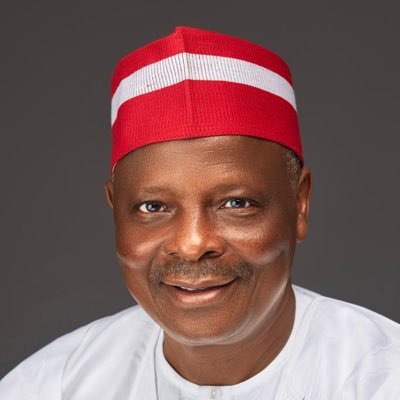
And then comes the final miscalculation, the talk that Kwankwaso, a two-time governor of the most populous state in the North, former Minister of Defence, former Senator, former Deputy Speaker, a man who built a political movement that has survived for twenty years without government funding, would accept to be running mate to Peter Obi. With due respect to Peter Obi, this is a total demotion. What does Obi have in his political resume that Kwankwaso does not have in double? Obi governed Anambra for eight years and could not produce a successor, could not build a movement that survived him, and left APGA to collapse immediately after him. His 2023 votes, while impressive, were driven largely by emotional and social media mobilisation, not by a two-decade grassroots structure like Kwankwasiyya with its red caps in every ward in Kano, Jigawa, Katsina and beyond. Kwankwaso built schools, built roads, gave foreign scholarships in hundreds, and his legacy is still visible. For him to deputise Obi would be like a General agreeing to be a corporal. It would be seen by his loyalists as a sell-out and would destroy the very movement he spent his life building.
My advice to Kwankwaso is simple and sincere. It is not too late. Leave the NNPP or NDC and return to your first love, APC. In APC, you are a founder with rights and history. In NNPP, you are managing a one-state party that can never produce a President of Nigeria because presidential elections are not won with Kano alone. President Tinubu is a forgiving leader who knows the value of Kano for 2027 and beyond. Today, the obstacle that drove you away, Ganduje as sitting governor, is no longer in Kano Government House. He is in Abuja. The ground is now clear for reconciliation.
If I were Kwankwaso, I would pick up the phone, seek a private meeting with President Tinubu, resolve the 2018 matter like two brothers, and rejoin the progressive family that gave me shelter when PDP humiliated me after 2015. History will forgive a man who returns home. History will not forgive a man who ends his career as deputy to a man he is senior to in every way. It is still not too late to come home.
-Segun Dipe writes on politics and governance.