
Ignorance fuels teenage pregnancies, unnsafe abortions, forced marriages across Nigeria
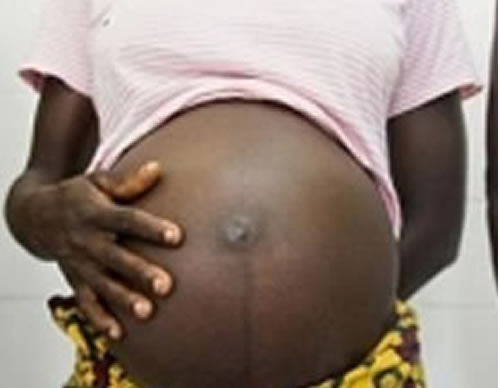
Girl 16, wanted to be a doctor, became bride, left after half a decade to rebuild shattered dreams
By Samuel Ogunsona
Last month, Nigeria joined the world to mark World Contraception Day.
The date was September 26, also the World Safe Abortion Day on September 28.
The events have brought to national focus the travails of young girls in a country of over 200m people, half of which are female.
In Nigeria, experts say 15% girls aged 15 to 19 have passed through teenage pregnancy.
The Nigeria Demographic and Health Survey (NDHS) figures indicate that about 11% have delivered their babies, 4% are pregnant while 2% lost their pregnancies.
It is estimated that Nigeria records no fewer than 200,000 unplanned births annually among teen girls
Lola, 16, has a similar story.
Fresh out of secondary school, her case remains a glowing reference to what many young girls encounter in Nigeria.
Her dream was to be a medical doctor.
“I had only one dream, the dream was to get educated and become a medical doctor, I wanted to become a doctor, to make it in life,”
she said without excitement, like someone whose energy has been caged. Her eyes deep in malnourished sockets, he skin sun-tanned with boredom and despair etched on her face.
Today, she is in her mid-twenties, a mother.
She barely managed to unchain her hands from a marriage she never wanted, a marriage she now describes as the “bitter experience” of her life.
Hear her: “I didn’t know the word contraceptive. I never knew about pills, implant, menstrual cycle, I didn’t know anything.That ignorance cost me my dream.”
Lola’s story, shared on condition of anonymity, is not an isolated tragedy. It is a data point in a national crisis where contraceptive information failure is fueling a chain reaction, unwanted pregnancy, which then fuels unsafe abortions that kill, or forced child marriages that end education. Lola endured the second, and lived to leave it after six years and few months.
Lola finished her WAEC in 2016. While waiting for JAMB the next year, she took a common sales girl job for school leavers in her area. One day, she forgot her phone in the shop and could not go home without it because her parents would punish her. A female friend told her she knew someone close to the shop who could help pick it up. That person was the young man.
That small incident became the turning point.
“Due to curiosity, I wouldn’t say it’s totally curiosity, it’s just the desire of a young girl that wants to explore more, the desire to enjoy somethings I haven’t done before. The mentality for me was freedom, because I just finished high school and I felt I’m a young adult and I have freedom and I can start dating,” she recalls.
She began having unprotected sex. She had no knowledge that she needed protection, because the only sex education she had was a diagram of the reproductive system in biology class, which she admits she did not fully understand.
“What encouraged me to have unprotected sex was wrong information I heard from other people. In fact, I didn’t know about pills, implant, menstrual cycle, I didn’t know anything,” she says.
Report confirms how common Lola’s ignorance is. According to the Nigeria Demographic and Health Survey (NDHS) 2023-24, only 7.6 million out of 51 million Nigerian women aged 15-49 use modern contraceptives.
Modern contraceptive use among married women is just 15 percent, far below the Federal Government’s Family Planning Blueprint target of 27 percent by 2030, Guardian Newspaper had earlier reported
Dr. Fagbamila Mercy explains: “From a medical perspective, lack of accurate information about contraception, combined with limited access to contraceptive services, can increase the risk of unintended pregnancy among adolescent girls. WHO identifies barriers such as inadequate knowledge about contraception, difficulty accessing services, stigma and restrictions.”
Olusegun Falade, a medic at a state hospital in Lagos, says: “There is poor awareness about the use of contraceptive pills in our communities. Perhaps, because we are too religious in this part of the world that such information is being concealed from this age bracket. Our skilled reproductive health workers are not doing enough to sensitize this age group.”
Samsu Gombwer, Co-director, Ipas Nigeria Health Foundation, says this gap is a major driver: “The gap in accurate sexual and reproductive health information is a major driver of unintended pregnancy among adolescents.”
He explains that many adolescent girls rely on non-family sources, which exposes them to misleading information, contributing to teenage pregnancy and early marriage. According to Ipas, adolescent birth rates are estimated at 75 per 1,000 births, while only 3.3% of adolescent girls have access to modern contraception.
Moment of Fear
Lola’s regular period did not come.
“My period is always regular, so, I discovered I didn’t see it and it was a few days late knowing that I was actively having unprotected sex, I suspected it was pregnancy,” she says.
“I was pregnant in 2017, when I discovered about my pregnancy, my first reaction was fear, I was thinking what happens next, how would my parents react, what would society say or think of me,” she says.
She told her boyfriend. He suggested a diagnostic centre. Blood test. Positive. He promised to be there.
At home, her mother noticed physical changes and confronted her. Lola denied many times before breaking down.
“I had to tell her the truth and I was crying to say I’m sorry, there was this regretful cry from her as well saying ‘because I was the last born and she had this idea that I would be the one to finish my education up to the highest level.”
Early Marriage She Calls Her Bitterest Experience
When Lola’s mother discovered the pregnancy, her first suggestion was to get rid of it. Lola was scared of abortion. Her father then made a final decision.
“It was my Dad who made the final decision saying, No, I won’t get rid of it, I will keep the baby and make sure to marry the person that got me pregnant,” Lola recounts.
“The pregnancy was the only reason why I got married to the guy, it wasn’t love, or any other reason, it was because of the pregnancy.” Lola said.
What followed was the most bitter experience of her life. For six years and few months, she went from a schoolgirl with a dream of medicine to a wife expected to cook, clean, and raise a child in a marriage built on consequence, not love.
This is what researchers call the pregnancy-to-marriage pipeline. NDHS 2023-24 shows 15 percent of girls aged 15-19 have already been pregnant. UNICEF data shows two in five young women in Nigeria were married before 18.
Dr. Fagbamila Mercy explains: “A 16-year-old is still an adolescent, and forcing her into marriage and early motherhood can have significant physical, psychological and social consequences. WHO reports increased risks of eclampsia, puerperal endometritis and systemic infections among adolescent mothers.”
She mentioned,”WHO identifies adolescents who are pregnant, parenting, or in early or forced marriages as groups at increased risk of mental-health conditions.”
Olusegun Falade says, “You can’t foist marriage on an adolescent just because she got impregnated. Unwanted pregnancy should never be a yardstick for early marriage. A girl of 16 years is morally and culturally unfit for marriage as such she tends to ostracize herself not only from her immediate family and peers but also from the society.”
He warns, “Our anatomy teaches that the female bony pelvis reached its obstetrically most adequate and favorable shape for childbirth at 25 and 30 years. Just imagine how fragile a 16 years old girl’s bony pelvis would be. An expectant mother of 16 years is likely to experience obstructed labour, hence an indication for Caesarean Section. Often times ends up with massive complication such as Vesicovaginal fistula.”
Shobha Shukla, Coordinator and Host of SHE & Rights initiative, says, “Lack of information about contraception is not unintentional or accidental or an oversight but it is forced upon girls because of patriarchy that runs deep into our systems as well as because of poor or non-existent comprehensive sexuality education, and lack of adolescent-friendly and accessible sexual and reproductive health services.”
After six years and few months, Lola left to pick up her life.
According to Lola, the marriage was never built on love, so it could not survive. She is now separated and trying to return to education.
“At the age of 16, I had only one dream, the dream was to get educated and become a medical doctor. Getting pregnant early with marriage altered my life, my life got paused, I couldn’t go further, I stopped there,” she says. “From a young girl with a big dream to a girl that became cooking for a man, cleaning and going through motherhood journey.”
“Knowing what I know now, what I could have done differently, even if I get pregnant, I would have turned to become a single mother not going into early marriage due to pregnancy. I would have pursued my dreams without marriage holding me back.”
For Lola, the price was six years and few months in a bitter forced marriage. For many others, the price is death.
Nigeria has an estimated 2.4 million induced abortions yearly, about 26 per 1,000 women of reproductive age according to monitoring groups like the Guttmacher Institute and Performance Monitoring for Action (PMA).
Gombwer says, “When adolescents are stigmatized for seeking information or services, they are less likely to use contraception and more likely to face unintended pregnancy. For some, the fear of stigma, family rejection, or disrupted education then pushes them toward unsafe abortion.
“Unwanted pregnancy among adolescents is rarely caused by a single factor. Major contributors include the lack of Comprehensive Sexuality Education, limited access to contraception, stigma around adolescent sexuality, sexual violence, and gender inequality.” He said.
Dr. Fagbamila explains furthe, “Complications can include severe haemorrhage, infection, incomplete abortion, and injury to the genital tract. In the most severe cases, these complications can lead to shock, severe infection, organ damage, long-term disability and death.”
Falade says, “I have had a series of encounter with this age group in my facility presented with various complications as a result of septic abortion. The list includes profused bleeding per vaginum, foul smelling vagina yeast infection, excruciating lower abdominal pains, uterine laceration, cervical prolapse, most importantly retained products of conception.”
Shobha Shukla says, “Youth- and adolescent-friendly services will only reach the girls and other young people when we do justice to providing comprehensive sexuality education as part of our education system.”
Gombwer says after the two global days, government must treat solutions together.
He continued, “To reduce deaths from unsafe abortion, government and partners should not treat youth-friendly contraceptive services, information, and policy reform as separate choices. They are connected priorities.”
Lola agrees, “Children have curiosity, they want to know things, sex education doesn’t have to wait until a child turns 18, when a child starts asking questions, we should educate them about it without fear… Parents are scared to say the word sex in front of their children because they feel they will get corrupt but mind you, they are already seeing it and hearing it around.”
As Nigeria moves beyond World Contraception Day and World Safe Abortion Day, Lola’s story asks, How many more doctors will Nigeria lose because contraceptive information failed?