Yoruba breaks record as Prof Badero emerges World’s First and Only Cardio-Nephrologist
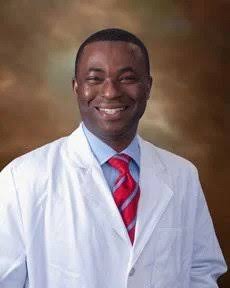
“Around Christmas one year, I received a White House envelope… I found a Christmas card signed by President Barack Obama, Michelle Obama, Sasha, Malia, and their dog Bo!”
Prof Badero
In the whole world, he is the only Board-Certified Interventional Cardio-Nephrologist. He is Yoruba.
As a boy in Lagos, Olurotimi Badero sometimes lay awake wondering whether he would see the morning. Asthma had made him a frequent patient, and his family had already lost a baby daughter.
Few who knew that sickly child could have guessed where he was headed.
Today, Professor Olurotimi John Badero, whose family hails from Isonyin town in Ijebu land, Ogun State, is recognised as the world’s first and only board-certified interventional cardio-nephrologist, a physician trained to treat the heart and the kidney together.
He is also described as the first Professor of Cardiology and Nephrology in Nigeria and across Africa.
Between that sickroom and the catheterisation laboratory lie a scholarship won as a child, a taxi driven from 5 a.m. for $12 a day, ten consecutive years of training, and a father’s unyielding demand for perfection.
This article follows that path from Lagos to the United States and back to Nigeria, with dates where the record gives them, and draws out lessons for young professionals along the way.
He was born in Lagos where he spent his childhood between 1971 to1988 though his parents actually gave birth to him in Ibadan before he was brought to Lagos.
He was the seventh of nine children of Chief Eliab Olufemi Olujoye Badero and Mrs. Stella Taiwo Badero. His mother worked as a secretary at Barclays Bank. His father, a trained tailor who became a typist and administrative manager at SCOA Motors, gave him the name Olurotimi, “God stands by me, God is always with me”, and a motivation mantra he still lives by, one sentence that set a bar no later success has lowered:
“Good is not good enough. Strive for perfection.”
— Chief Eliab Badero, to his young son
Faith and frailty marked Olurotimi’s early years. He survived measles at four, and the family lost his baby sister, Olufunmilayo Abosede, to bronchopneumonia at eleven months. He was asthmatic and remembers nights when he did not know whether he would see the morning. After hearing the story of Solomon at primary-school devotion, he prayed:
“God, please give me the wisdom of Solomon, make me very smart, and while You’re at it, don’t forget to find me some puff-puff.”
— Professor Badero, recalling his childhood prayer
The prayer was answered in multiple ways. In 1981, when Olurotimi was ten years old, his mother entered his name for a Barclays Bank scholarship available to employees’ children. A brilliant student, he won the competitive award, which fully funded his secondary and university education.
By the time he left Federal Government College, Odogbolu, in 1988, his brilliance had paid off. Besides skipping two grades in primary school, he was also one of four students who won the maiden National Young Scientists’ Quiz in 1987, and he finished with nine distinctions.
Ife: Nigerian Foundations and a Calling (1988 onward)
Studying medicine was not Olurotimi’s original plan. He had initially wanted to be an engineer, but his father persuaded him that he would achieve a rare feat if he followed what would become his true destiny. Beyond his father’s persuasion, his fascination with the doctors who treated his asthma, a book of human anatomy diagrams, and the encouragement of teachers who steered top students towards medicine confirmed his path. He puts it simply:
“Put all together, I knew my calling would be to help other people by becoming a doctor.”
— Professor Badero
In 1988 he entered Obafemi Awolowo University, Ile-Ife, to study Medicine and Surgery. He then completed his internship at the university’s Teaching Hospitals Complex and his national youth service at the General Hospital, Isolo, in Lagos. He has never been shy about what Nigeria gave him. Of his school days, he recalls that “teachers disciplined us, and if we complained at home, we received further discipline.” His mentors, he says, “instilled discipline and taught us to study independently rather than making excuses,” and his classmates at Ife “competed academically, bringing out the best in each other.” His verdict, which he gives to patients who ask about the certificates on his wall:
“I owe a lot to my education in Nigeria, particularly the University of Ife. The most colourful certificate on my wall is from Ife.”
— Professor Badero
On the very day he completed his final medical examinations, tragedy tested Olurotimi’s resolve. He reached home eager to share the news that he had survived a major road accident, only to learn that his younger brother, Peter Olanrewaju, had died. Grief clouded what should have been a day of celebration.
Early Years in the US (c. 1990s)
Olurotimi travelled to the US on a visitor’s visa, expecting support from a relative. Like many struggling immigrants, he slept on the floor of a mobile home, drove a cab for $12 a day starting at 5 a.m., and was turned away by fast-food restaurants for being overqualified. He later summarised those hustling years:
“There were many challenges, but for someone who is determined and stays focused, it is not impossible.”
— Professor Badero
What set him apart was careful planning and a bold commitment to a better life. He made a covenant with God to take all three steps of the US Medical Licensing Examination together—saving $250 in fees without taking review courses—and decided he would return home if he failed. Within four months of arriving, he passed all three steps on his first attempt.
He then applied for a medical assistant role at a dermatology practice in Los Gatos, California, truncating his résumé at his bachelor’s degree. The practice owners, both Stanford dermatology professors, hired him on the spot. Though paid $8 an hour to clean rooms and empty trash, Olurotimi took patient histories so thoroughly that Dr. David Harris relied on him for every patient. When assigned to prepare Mohs surgery slides, he produced higher-quality slides than the pathologist paid $45 an hour.
His hardest test came from a supervisor, Lee, who resented his absence from Friday social gatherings—a boundary recommended by his uncle to protect his career. She began sabotaging him by giving him false start times to make him appear late, but a colleague helped him get the correct schedules. When she pushed him too far, he replied quietly,
“Lee, under normal conditions, I wouldn’t be taking orders from you; you’d be taking orders from me.”
Furious, the supervisor demanded his dismissal. Olurotimi went to Dr. Harris directly and explained, “I’m grateful you gave me a chance when nobody else would. I didn’t lie on my résumé, but I didn’t tell you the whole truth.” He produced the results of all three licensing steps, which had arrived the day before. Dr. Harris called the staff together and announced, “Ladies, I have the pleasure of introducing Dr. Olurotimi Badero.”
That moment transformed how the staff treated him, and Dr. Harris’s recommendation letter later helped him secure a medical residency in New York.
Ten Years of Training: Becoming a Cardio-Nephrologist (to 2011)
Dr. Badero’s training journey was extraordinary. Over ten consecutive years, he completed a residency in internal medicine at SUNY Downstate Medical Center, a nephrology fellowship at Emory University, and a cardiology fellowship back at Downstate. He earned additional fellowships in interventional cardiology and peripheral vascular intervention at Yale-Bridgeport, followed by interventional nephrology at Downstate—ultimately securing board certifications across six specialities. By 2011, he was practising in Mississippi.
Depth takes time, and true innovation often lies at the intersection of disciplines. He describes his specialised role simply:
“Putting all that together, I would like to think of myself as an interventional cardio-nephrologist as well as a peripheral vascular interventionalist.”
— Professor Badero
Innovation, Practice, and Service (2011–2022)
In 2011, Dr. Badero performed the first transradial cardiac catheterisation and percutaneous coronary angioplasty at Central Mississippi Medical Center, an approach used in only 5–7% of US interventional cardiology cases and gentler on patients. Three years later, in 2014, he institutionalised the practice by founding Cardiac Renal & Vascular Associates in Jackson, Mississippi. He has also served as a hospice medical director, sat on a global advisory board for thrombosis and atherosclerosis, and promoted heart and kidney health on networks like the BBC. International media platforms have called him “a super-achiever and a rare genius.” He often jokes with patients about his dual speciality:
“…when it comes to matters of the heart, I literally get to the heart of the matter.”
— Professor Badero
Beyond his practice, he has mentored young physicians, taught medical trainees, and joined missions to reduce healthcare disparities, particularly in Africa. An assistant pastor at RCCG Vine Chapel and an avid painter, he views spirituality and creativity as essential to healing.
Bringing It Home
(2015–2026)
Since 2015, Professor Badero has helped counter brain drain by delivering lectures and training at Obafemi Awolowo University and the University of Lagos to health practitioners and doctors. He spoke at the 2016 Impact Houston Youth Empowerment Conference, took part in a panel at the 2019 World Bank Group–IMF Nigeria Heritage Conference, and has consulted for African nations on developing cardio-renal programmes and cardiac centres of excellence.
Since 2023, he has been Chief of Interventional Cardiology and Director of the Cardiac Catheterisation Laboratory at Iwosan Lagoon Hospital in Lagos, where he performed Nigeria’s first selective renal angiogram and first endovascular limb salvage revascularisation for critical limb ischaemia. Between 2024 and 2026, his team documented in international journals Nigeria’s first cases of coronary cameral fistula and of an anomalous coronary artery identified on angiography. Reflecting on his journey, he attributes his success to gratitude:
“I am grateful to America for giving me the skills and opportunity to serve people here, but I am even more grateful to Nigeria for setting the foundation and starting me on the path that has brought me this far.”
— Professor Badero
Honours and Recognition (1987–2026)
Professor Badero has received numerous honours throughout his career, and he attributes his achievements to a strong parental foundation:
“First, my parents, for instilling the foundation to excel and put forth maximum effort, believing that I can move mountains with hard work.”
— Professor Badero
Key recognitions include:
1987: Winner, with three schoolmates, of Nigeria’s maiden National Young Scientists’ Quiz.
2003: Distinguished Alumni Award from Obafemi Awolowo University (recorded in the US Library of Congress).
Since 2007: Consistently named among top US cardiologists by the Consumer Research Council of America.
2008: Association of Black Cardiologists’ scholarship for the top US cardiology fellow.
Interventional fellowship years: Graduated from the Yale-Bridgeport fellowship with distinction and an award for outstanding performance.
2014: Named a Mississippi Healthcare Hero.
2016: Dr. Badero’s pioneering dual-specialty medical career was formally recognized in the U.S. Congressional Record (‘Honoring John O. Badero’) by Representative Bennie G. Thompson.
2019: Most Purposeful Healthcare Person in Nigeria, awarded by former President Olusegun Obasanjo at the “Why I Am Alive” campaign.
Additional honours: The OAU Global Award for Excellence in Medicine, and the ANNL Presidential Award.
Regional and professional awards: Recognised by Castle Connolly and U.S. News & World Report as a top interventional cardiologist; featured on the cover of The Network Journal; honoured with the Brooklyn Bridge Rotary Club Humanitarian Award and the African Diaspora Excellence in Service Award.
Some honours arrived unexpectedly. He recalls:
“Around Christmas one year, I received a White House envelope… I found a Christmas card signed by President Barack Obama, Michelle Obama, Sasha, Malia, and their dog Bo!”
— Professor Badero
He has received annual presidential greetings since, and during President Muhammadu Buhari’s administration he was received privately in Washington, D.C., alongside four other distinguished Nigerians.
He holds fellowships in ten professional bodies, including the American College of Physicians, the American Society of Nephrology, the American College of Cardiology, the Society for Cardiovascular Angiography and Interventions, and the National Postgraduate Medical College of Nigeria. He serves on the editorial board of the International Journal of Nephrology and Renovascular Disease, reviews educational material for major medical societies, and is a Visiting Professor of Medicine at the University of Lagos.
Legacy: Skill, Service and a Standard Kept
Measured by what he has built, Professor Badero’s career is one sustained effort to widen what a doctor can do for a patient. His combined training treats the heart and kidney as one problem and has made him a recognised pioneer in his field. His work in Mississippi brought less invasive techniques and specialist care to patients who needed them, and his return to Nigeria has produced a series of documented firsts. Through lectures at two universities, mentorship, mission work and consultancy, he answers brain drain with transfer of skills. His father’s standard, “Good is not good enough,” has carried him through illness, loss, hardship and a decade of examinations.
That is why the DAWN Commission names him Akinkanju. His challenge to us all is his own:
“Some people sit on the fence and wait for things to happen, while others get off the fence and make things happen.”
— Professor Badero
He got off the fence, and a Yoruba son of Isonyin town became the world’s first and only board-certified interventional cardio-nephrologist. The DAWN Commission celebrates you, Sir. You are an Akinkanju.
Source: DAWN


