Ijesa Land – The Black Spot Growing in Plain Sight
By Babafemi Ojudu
I travel regularly on the Ilesa–Ibadan Road. Each time I pass through the Ilesa axis, I am confronted by a troubling sight.
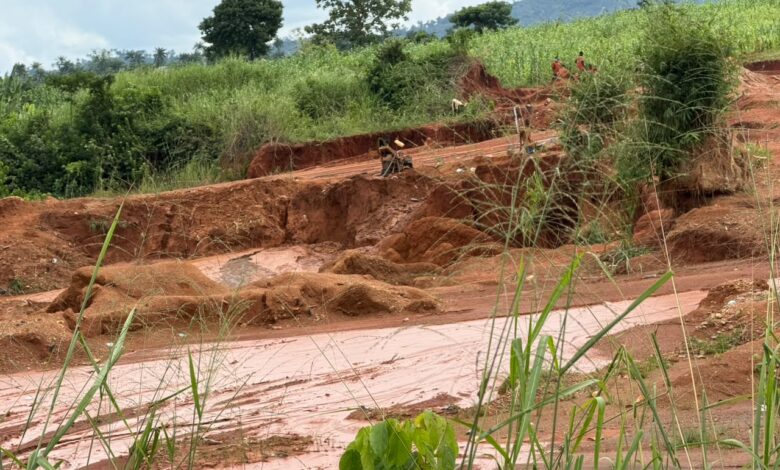
On both sides of the highway, artisanal mining activities have expanded significantly. The miners are numerous. Many appear to have come from outside the area. Some are from northern Nigeria, while a considerable number are reportedly foreigners, as I was informed when I recently stopped to make inquiries.
What has emerged is more than a mining site. It is gradually becoming a sprawling settlement of makeshift structures, complete with eateries, drinking spots, and, disturbingly, open drug peddling. A transient community of considerable size has taken root along one of the most important highways in the country.
Experience from other parts of Nigeria should concern us all.
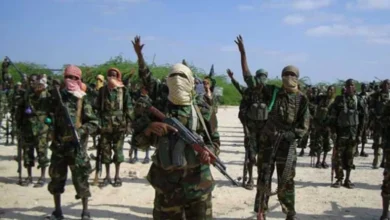
Across several states, unregulated and illegal mining activities have too often become associated with the proliferation of small arms, criminal networks, environmental degradation, drug abuse, and growing insecurity. While not every mining community follows this trajectory, the pattern is sufficiently established to warrant vigilance and early intervention.
What is troubling is the apparent indifference of those who ought to be paying attention. Neither the traditional authorities, the local government authorities, nor the Osun State Government appear to have publicly addressed the rapid growth of this settlement and the potential security implications that may accompany it.
This is not a remote camp hidden deep within a forest. It sits along a strategic corridor linking Lagos to Ondo, Ekiti, parts of the North, and the South-East. Thousands of travellers pass through this route daily.
The question we must ask is simple: what happens when the minerals become exhausted or mining activities decline? What alternative means of livelihood will be available to the large population that has gathered there? Have the authorities carried out any assessment of the security implications? Is there proper documentation of those residing in the settlement? Are security agencies monitoring developments? Do we know who is coming in, who is leaving, and what activities are taking place beyond the visible mining operations?
My concern is not to stigmatise anyone. Nigerians and foreigners alike have every right to pursue legitimate economic opportunities. My concern is for the safety of travellers, the security of adjoining communities, and the preservation of peace across Ijesaland and its environs.
This situation calls for proactive action rather than reactive lamentation.
The first step should be a comprehensive profiling and registration of all miners and residents of the settlement. Government agencies must determine who they are, where they come from, and under what legal authority they are operating.
Secondly, there should be a thorough audit of mining licences in the area to distinguish legitimate operators from illegal miners. Unregulated mining should not be allowed to flourish unchecked on such a strategic route.
Thirdly, security agencies should establish periodic screening and intelligence-gathering operations within the settlement. The objective is not harassment but prevention. Experience has shown that where large transient populations gather without oversight, criminal elements often find fertile ground.
Fourthly, the open sale of illicit drugs and other unlawful activities must be decisively addressed before they become entrenched. Drug abuse, illegal mining, arms trafficking, and violent crime often travel together.
Finally, the Federal Ministry of Solid Minerals, the Osun State Government, local authorities, and traditional institutions should work together to develop a clear framework for regulating mining activities in the area while protecting host communities and road users.
One of Nigeria’s recurring failures is our tendency to ignore warning signs until they evolve into full-blown crises. We often see problems approaching but fail to act until they become difficult, expensive, and sometimes impossible to contain.
I therefore respectfully call on Kabiyesi, the Owa Obokun of Ijesaland, the local government authorities, the Osun State Government, and the relevant security agencies to take a closer look at this emerging development. A comprehensive assessment of the settlement, its population, activities, and long-term implications should be undertaken before circumstances overtake us.
The purpose of leadership is not merely to respond to crises; it is to foresee them and prevent them.
As the old saying goes, to be forewarned is to be forearmed.