In defence of the resilient people of Cuban
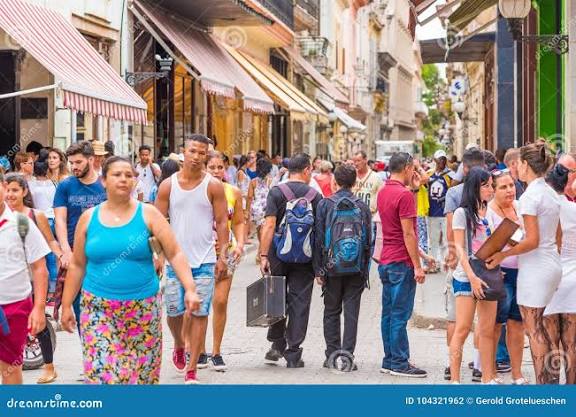
By Femi Falana (SAN)
President Trump should be challenged to justify the basis of including Cuba in the fresh list of state sponsors of terrorism. Specifically, the United States should disclose where and when Cuba sponsored terrorism from 2015-2026.
On January 3, 2026, the United States armed forces bombed Caracas, killed more than 100 people and captured President Nicolás Maduro and his wife, Cilia Flores. They were swiftly flown out of the country and detained in Washington without any legal justification. Both captives have since been charged with narco-terrorism, cocaine trafficking, and possession of machine guns and destructive devices against the U.S before a District Court in the United States.
The trumped up charges have been discredited by President Trump himself who has admitted publicly that he carried out the invasion to seize and control the oil resources of Venezuala. In fact, in a brazen violation of the sovereign rights of the Venezuelan people, Mr. Trump has been running the country with particular attention to having U.S. oil companies take over Venezuela’s oil and other resources.
Nothswithstanding the global condemnation of the illegal invasion of Venezuela, the United States has threatened to carry out a regime change in Cuba through dubious campaign of calumny and economic stangulation.
Thus, on January 29, 2026, President Trump signed Executive Order 14380, “Addressing Threats To the United States by the Government of Cuba” (the “Executive Order”), in which he declared a national emergency with respect to Cuba and authorized the United States to impose new tariffs on imports from countries that directly or indirectly supply oil to the Government of Cuba.
Without providing any evidence whatsoever, the United States accused Cuba of aligning itself with “hostile countries and malign actors, (and) hosting their military and intelligence capabilities” – including Russia’s largest overseas signals intelligence facility. It also accused Havana of providing a safe haven to terrorist groups “such as Hezbollah and Hamas” and of inciting “chaos by spreading communist ideology.”
The Executive Order is accompanied by a White House Fact Sheet outlining the administration’s national security and foreign policy rationale, which also explains how the action fits within a broader escalation of pressure on Havana. The Executive Order has intensified the economic santions imposed on Cuba for the past 6 decades successive regimes in the United States.
Mr. Trump has threatened to impose harsh tariffs on imports from countries that sell or provide oil to Cuba. The announcement comes as Cuba is already experiencing severe oil shortages after Venezuela, its main source of fuel, stopped sending tankers following the U.S. extraction of its leader. A Cuba-bound Venezuelan oil tanker was illegally seized in December due to the naval blockade imposed by the US against Venezuela. Mexico has been forced to stop oil shipments to Cuba following Mr. Trump’s threats.
In order to justify the threat to overthrow the socialist regime and thereby subvert the sovereign rights of the Cuban people, President Trump has asked the Cuban government to “make a deal” or face consequences. But out of sheer arrogance, the Trump’s administration has refused to enter into any form of dialogue or negotiations with the leaders of Cuba.
It is common knowledge that in June 2015, the United States took Cuba off the State Department’s list of state sponsors of terrorism and cleared the path for the restoration of diplomatic ties. President Trump should be challenged to justify the basis of including Cuba in the fresh list of state sponsors of terrorism. Specifically, the United States should disclose where and when Cuba sponsored terrorism from 2015-2026.
However, the President of Cuba, Miguel Díaz-Canel has rightly accused President Trump of trying, under a false and baseless pretext, to suffocate the economy by imposing tariffs on countries that sovereignly trade oil with Cuba. It has been confirmed that only one oil shipment has arrived this year – 84,900 barrels from Mexico. Given the current reserves, Cuba will run out of fuel in the next few days with dire consequences for the population.
Cuba has announced that it was running out of fuel, causing foreign airlines to suspend flights to the island. The new wave of sanctions have virtually ruined the tourism industry. No doubt, the tariffs will cause a far-reaching humanitarian crisis and escalate the economic crisis in Cuba. The crisis will have adverse effect on schools, hospitals and other social services. In the interim, a series of emergency measures are being adopted by the Cuban government to mitigate the impact of the severe fuel shortage facing the island.
Contrary to President Trump’s unsubstantiated allegations, Cuba has never been linked with terrorism. In fact, unlike the governments of the United States that sends troops abroad to fight wars and massacre people in the interest of global capitalism, thousands of Cuban troops joined the liberation movements in the Southern African region to defeat apartheid and its western allies.
On a regular basis, Cuba sends medical personnel abroad to save lives. For instance, in 2020, Cuba’s medical brigades were deployed to over 30 countries including Italy to combat the dangeous Covid 19 pandemic. Before then, Cuba had assisted Africa to defeat the dangerous ebola disease in Guinea, Liberia and Sierra Leone. Indeed, it was the exceptional humanitarian role played by Cuba during the ebola crisis that led he United States and Cuba to reopen embassies in each other’s capitals on July 20, 2015, taking the biggest step toward ending half a century of animosity between the two countries.
Unfortunately, President Trump has turned round to impose more economic santions on Cuba. Following hurricane Melissa that swept across the Caribbean in November 2025, about 2.2 million Cubans were displaced. The United Nations launched a $74 million appeal fund to counter the devastation caused by the natural disaster.
Even though the people were in dire need of assistance across the eastern provinces of Granma, Santiago de Cuba, Holguin, and Guantanamo, many countries were unable to donate funds and relief materials for fear that President Trump might impose tarriffs on them.
The United Nations has expressed concern about the growing fuel shortages and their impact on people and the disruptions to the delivery of clean water, medical care, food and other critical aid in parts of Cuba hit hard by the Hurricane Melissa. The economic stangulation of Cuba constitutes a threat to regional stability and international law. President Trump must not be allowed to replace international law with gangsterism.
Therefore, the time has come for all nations to return the internationalism and solidarity that Cuba has consistently shown to African people and other oppressed peoples in the world. The genocide of the Cuban people being prepared by President Trump must be prevented by all progressive forces. All governments must publicly reaffirm their commitment to international law and oppose the economic suffocation of Cuba by the United States.