Obi’s Greatest mistake
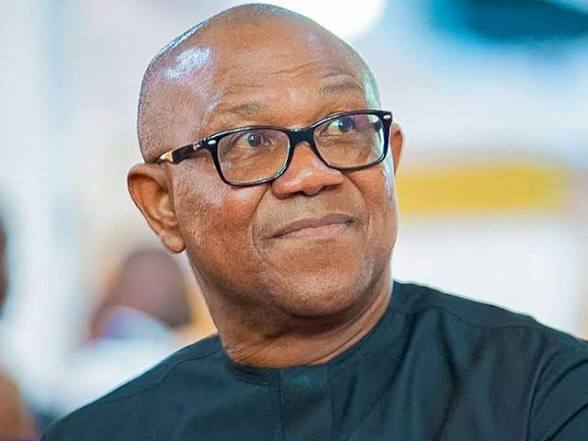
Transition from serious contender to mascot
By Azu Ishiekwene
Friends, admirers, and the “Obidient” fanbase of the former Labour Party (LP) presidential candidate, Peter Gregory Obi, love to call him by the sobriquet “Okwute,” which in Igbo, Nigeria’s third-largest socio-linguistic group, means rock, boulder, or stone. Quite a nice alias – especially if you associate some doctrinal nuances of Obi’s faith with his first name, Peter.
The symbolism of the name Okwute, borne by males, signifies one who is strong, dependable and unyielding in Igbo cosmology. But a nice alias is not necessarily a fitting one.
The fluidity with which Obi moves around the political circuits has little, if any, resemblance to a rock, boulder or even a stone. Except, of course, if he’s a rolling stone, lacking in constancy, bereft of moss. A rock or a boulder is solid, come rain, come shine; it is constant in and out of season.
I’m not suggesting that Okwute should have remained in Onitsha or Aba. That would be absolutely ludicrous! After all, life is a journey.
Peter the Clay
I’m saying that this Obi is a Peter of Clay – malleable, confused, and lacking in staying power. He’s drifting, mistaking a jungle for a zoo. This should be a great source of worry for his troops, especially the social media-based avatars (without voter cards), who deify Obi and whose political signature tune is “the Obi-way or the highway.” His political history needs no retelling other than to record what a missed opportunity it represents.
After the tale of him winning the 2023 presidential poll – an election in which he punched above his political weight and won in 12 states – even if only with narrow margins outside his south-eastern enclave, Okwute fragmented like sedimentary rock thereafter. It would have been sufficient for him to build on his good showing at the poll, but claiming he won an election in which his party had no agents in about 54 percent of the polling centres was a stretch.
A Yiaga Africa Report on the 2023 elections said that while the APC deployed agents in 96 percent of polling units, the Labour Party deployed agents in only 46 per cent. Agent deployment is a critical factor in election performance.
Failed romance
The man who became the de facto and adopted candidate of the Nigerian Labour Congress and sundry trade unions – a substantial voting bloc, failed to seize the initiative after the poll. He went on throwing tantrums, wasting energy and resources in litigation, and missed the opportunity to consolidate and build the structure of the Labour Party – a convenient vehicle he had appropriated overnight, barely three days before the presidential primaries of his previous Peoples Democratic Party in May 2022.
Justice Ayo Isa Salami, a retired president of the Appeal Court and an eminent jurist, has criticised Obi’s midnight migration to LP as an illegality that would have excluded him from the presidential contest. Salami said Obi’s participation was the result of poor judicial diligence and perhaps a lack of experience on the bench.
Okwute’s jump also stirred speculations and gave credence to the claim that he was deliberately avoiding primaries in the PDP.
Missed opportunity
Yet his near-spontaneous entry into the LP created a political wave that came at high tide. Not only was it dynamic, but it was the stuff of legend. Sustaining it beyond the elections would have made a great difference because LP very much needed nurturing, growth and strategy.
But Peter Obi was not paying attention, focusing instead on the next election rather than rebuilding the party.
LP adapted to Obi rather than the other way around. It even accommodated Okwute’s capitalist credentials into its semi-socialist fold. Nothing really mattered so long as LP had a presidential candidate – an ‘Okwute’ in the race.
Without as basic a requirement as agents to represent it at the polling units, LP went into the general elections and performed barely short of a miracle, winning one governorship, six senatorial and 34 House of Reps seats in one go. It was a foundation on which any serious politician would have built an inspiring career.
But the momentum was left to waste, casting him in the light in which his former adversary-turned-friend, Governor Nasir El-Rufai, described: a Nollywood actor. Okwute watched the slow but sure unravelling of the LP, as it collapsed from factional crisis.
Rather than being the elder in the house and leading the LP to consolidate on its initial achievements, he bolted. He has now pitched his tent with the African Democratic Congress (ADC), an assortment of mostly aggrieved power-mongers, in whose company the former Obi might have been immensely uncomfortable.
The game in town
Yet, even in this temporary shelter, the only game is who takes the presidential ticket. While the ruling All Progressives Congress (APC) is preparing as if elections were tomorrow, collecting defectors, aggressively registering new members, and even testing its election situation room (all this despite its poor record in office), the opposition is missing in action. The opposition’s strategy appears to be to sufficiently discredit the process before elections to hide its own catastrophic incompetence.
Whether Okwute sees it or not, he has expended his store of political goodwill without reinvesting or making good capital of it. The man who won Lagos, the impregnable home of President Bola Ahmed Tinubu, and the Federal Capital, catchment area for the government in power, has by word and deed, proved that it was a fluke – an emotional response from the young and aggrieved and a bloc of Christian voters thirsty for change.
That Kano visit
On Sunday, Okwutevisited Kano on a Sallah homage to Rabiu Musa Kwankwaso of the New Nigeria Peoples Party (NNPP). In 2023, an expected alliance between Okwute and Kwankwaso failed because Kwankwaso, with a wider political footprint but no less ambitious, would not be Obi’s vice presidential candidate.
Kwankwaso had said offering Obi the vice presidential slot under him was a “golden opportunity,” implying that Obi would be lucky to join his ticket rather than the other way around. For good measure, Kwankwaso said age, experience, and performance disqualified Obi from the presidency, hinting that the NNPP would collapse if he accepted a subordinate role to Obi.
With Obi now in ADC and Kwankwaso still nursing the remnants of his NNPP, it is a good time to ask who is gravitating toward whom. The ambitions of both men are well known, and the ADC’s presidential ticket is nearly foreclosed.
Obidients won’t accept anything less than an Okwute presidential ticket. Kwankwaso’s impressive crowd, more on the streets with their red caps than behind touchscreens, is no less vociferous. They won’t hesitate to tell Obidients that RMK is bigger politically, older, and a PhD holder with far superior performance as governor.
And the Kano crowd – especially at Sallah – was, as usual, huge and dramatic. They received the guest as they would a mascot. In Kano, every player thinks they have the crowd until they see a bigger one.
Obi has paid the price for a ticket to the zoo, but he’ll soon find that he’s in a jungle.
Ishiekwene is Editor-In-Chief of LEADERSHIP and author of the book: “Writing for Media and Monetising It.”