O’oni, Alaafin plots to divide Yoruba Nation
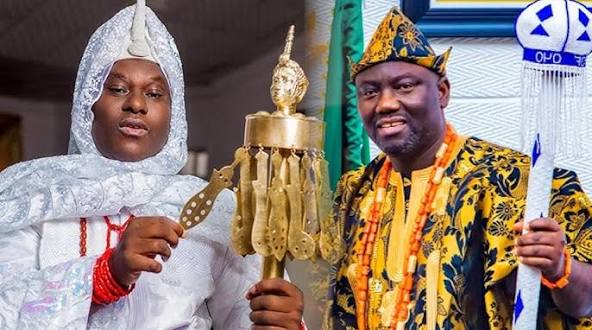
By Jamiu Ajiboye Owolabi
Yoruba identity, as it is known today, is an idea of Yoruba intellectuals. Before the nineteenth century, Yoruba identity was limited to Oyo-speaking groups, while other groups retained their tribal identities, such as Ijesha, Ekiti, Ijebu, and Ife.
However, colonialism changed the chain of events as it placed the entire descendants of Oduduwa in a position where they had to unite under one umbrella or suffer as fragmented minority groups in the emerging colonial Nigeria.
The search for a common identity propelled Yoruba intellectuals to reach a consensus on adopting Yoruba as the collective identity of all descendants of Oduduwa. It all began with Samuel Johnson, who wrote a history of the Yoruba that obviously glorified Oyo above all other descendants of Oduduwa.
However, despite the bias in some parts of his book, he contributed to the search for Yoruba unity. He acknowledges the wars and disunity in Yorubaland in the nineteenth century and then proposed that the Yoruba should unite under a single identity.
He wanted the Yoruba to be united under the leadership of Alaafin, extending the Oyo imperial model over the rest of Yorubaland. The model was accepted by the colonial administrators, even though it was gradually modified to address protests from other Yoruba tribes, who rejected it on the argument that they were not subordinate to the Oyo empire.
Undoubtedly, there are misconceptions in Johnson’s accounts, and his book is perhaps the most criticised work on Yoruba history; however, almost all scholars of Yoruba history have referenced it in their writings.
Prof Akinjogbin also contributed to the search for Yoruba identity through his concept of the Ebi system. He contends that all descendants of Oduduwa are one Ebi, as they share a bloodline traced to Ile-Ife.
The Yoruba, irrespective of their locations, are one family with a similar culture, as Fadipe observed and as argued by Falola, Oyo people were the first to be labelled Yoruba, before it was extended to cover all the descendants of Oduduwa in the nineteenth century
However, Akinjogbin argued that Ijesha and Ekiti rejected Johnson’s proposed model of Alaafin as the central authority of Yoruba Nation.
This led to the introduction of a Roman Empire model, proposed by Talbot in 1926, which recognised Ooni as the spiritual leader and Alaafin as the political leader.
This model, too, was challenged by Akinjogbin, who claimed there was no evidence in history that Alaafin’ political protection covered all the Yorubaland or Ooni performed spiritual rites over all the Yorubaland. What is close is an instance when Alaafin Aole threatened to attack Apomu, a town under Ife’s control. Baale Apomu sought refuge in Ife, but Ooni could not offer him protection, and he eventually committed suicide as demanded by Alaafin.
That single instance is sufficient to justify Alaafin’s political influence over parts of the Ife territories.
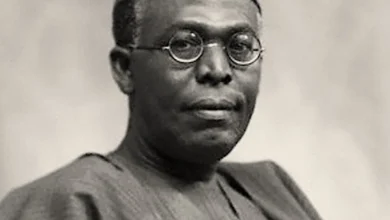
Chief Obafemi Awolowo
He built on the template of Yoruba identity in his political mobilisation in the first republic. He unified Yorubaland politically under his political party, the Action Group. Awolowo must have studied the scholars’ debate over Yoruba identity. For the first time since the nineteenth century, he united the Yoruba as a political entity in the new country of Nigeria.
It is against this background that I feel compelled to address the way the reigning Aaafin and Ooni are moving in a direction that can dismantle the unity built by the Yoruba intellectuals.
The rivalry between the two foremost traditional rulers is threatening the unity of the Yoruba Nation. Alaafin is claiming ownership of the Yoruba identity, while Ooni is moving towards replacing the Yoruba identity with the Oodua identity.
The two kings are moving towards dividing the Yoruba Nation into two different Nations to satisfy their personal differences. In 2024, while the throne of Alaafin remained vacant, Ooni Ogunwusi Ojaja II conferred the title of Agbaakin Basorun of Yorubaland on Chief Waheed Olashile Alexandra. The news was shockingly received in Oyo, given that the previous Alaafin, Oba Lamidi Adeyemi III, had successfully challenged the previous Ooni, Oba Sijuade Olubuse, through judiciary, when he planned to confer the title of Akinrogun of Yorubaland on Chief Tom Ikimi.
The court verdict favoured Alaafin to be the sole authority that could confer the “Yoruba” chieftaincy title on qualified individuals. In 2025, Ooni Ogunwusi Ojaja II, again, conferred the chieftaincy title of Okanlomo of Yorubaland on Chief Dotun Sanusi. Alaafin, Oba Abimbola Owoade responded immediately by issuing a 48-hour ultimatum for Ooni to reverse the title, and it took the intervention of Chief Dotun Sanusi himself, who came out to declare that he was Okanlomo of Oodua, not Okanlomo of Yorubaland, to ease the tension.
However, Alaafin was not satisfied, and he went ahead to install Seyi Tinubu as Okanlomo of Yorubaland. At the installation ceremony, he (Alaafin) declared that he was the only king with the authority to confer Yoruba chieftaincy titles on qualified individuals.
The news of Alaafin’s declaration and the installation of Seyi Tinubu sparked anger in Ife, and in response, a series of cyberattacks targeted Oyo and the Alaafin. In the imaginations of the cyber attackers, Yoruba identity should be discarded and replaced by Oodua identity to satisfy the interests of the Ooni.
They suddenly manufactured their version of Oyo history, claiming that a non-existent Oloyo ruled Oyo before Oranmiyan conquered him. One Osun-based journalist who is expected to be informed also joined the bandwagon by reaffirming the fabricated Oloyo version of Oyo history, even though he shot himself in the legs by citing Chief Fayemi Elebuibon as his source..
He neglected hundreds of publications on Oyo history, yet cited Chief Fayemi Elebuibon, who relies on Ifa verses for his understanding of history. It is a hypocrisy of the highest order because in historiography, Ife verses, as well as the Quran and the Bible, cannot be accepted as sources of history.
Finally, I want to appeal to both the Alaafin and the Ooni to halt the rivalry, as it is beginning to threaten the fundamental foundations of the Yoruba Nation.
If Johnson’s proposed model of Alaafin central leadership and the Talbot’s model of Ooni as spiritual leader and Alaafin as political leaders as explained above are rejected, a new model based on mutual understanding and respect can be developed.
In a Yoruba proverbial statement, it’s said that “Bí erù bá koòkè tò kòsàlè, óní bi ta gbesí ( when a load cannot be placed upward and downward, there’s another place for it). More importantly, I must say that it is wrong for Alaafin to be claiming sole ownership of Yoruba identity because the identity is now a collective property of every descendant of Oduduwa.
Similarly, it is wrong for Ooni and his self-appointed cyber-supporters to be calling for replacement of Yoruba identity with Oodua identity. Yoruba identity has been recognised globally and we must desist from arguments that are capable of dragging us backward. I urge our royal fathers to listen to the voice of the intellectuals and as Falola contends, the voice of the scholars has become the voice of the Nation.
Jamiu Ajiboye Owolabi writes from the United Kingdom