
Bitter Lessons from Venezuela: Why Realists Are the Right in Global Power Play
Beyond Law and the UN lies a world driven by the pursuits of survival, power, and security.
By Gimba Kakanda
My fascination with realism school began early in my study of international relations theories. It is an uncomfortable theory to glorify in interpreting global affairs when one still has a heart, but to forget that the international system is an anarchy pretending to be a rules-based order is a discovery many leaders live to regret or die regretting.
What realism does is strip away comforting illusions and force us to confront a harsh truth: beneath the language of law, morality, religion, and shared humanity and beyond the fancy speeches at the United Nations lies a world driven by the pursuits of survival, power, and security. This is precisely where many leaders go wrong. They mistake rhetoric for leverage, outrage for strategy, and moral performance for power. Power, as Cersei once said in a brutally honest moment in the TV series Game of Thrones, is simply power. It’s not the Foucauldian conception many of us glamourise. Power is who wields the biggest gun. Simple and short. This articulation aligns disturbingly well with the realist conception of power in world politics.
At its foundation, realism, or what we call classical realism, tells us that every state is driven by an endless struggle for power and security. Hans Morgenthau argued that international politics, like all politics, is governed by objective laws rooted in human nature. States, like individuals, are driven by self-interest. A state may wear a cassock or an ihram to enter a partnership with you, but it comes for one reason alone: a shared interest. Not virtue. Not goodwill. Interest is the true currency of international relations.
A later variant of this tradition, known as neorealism or structural realism, shifted attention away from human nature to the structure of the international system itself. They emphasised that the distribution of power, or polarity, determines state behaviour. States react not to intentions, which are unknowable, but to capabilities, which are visible. You do not threaten a state because you wish to bluff; you do so because you possess the capacity to carry out that threat or to defend yourself if challenged.
This is the central thesis of John Mearsheimer’s The Tragedy of Great Power Politics. He argues that because the international system is anarchic and lacks a higher authority capable of guaranteeing state survival, all great powers are compelled to behave aggressively, regardless of their intentions or moral preferences. Since intentions can change while capabilities endure, rational states assume the worst about one another and therefore seek to maximise relative power as a means of survival, with the ultimate objective of becoming regional hegemons. This dynamic is what Mearsheimer describes as the “tragedy” of great power politics, presenting a system in which even states that would prefer peace are structurally driven towards rivalry, expansion, and conflict, rendering sustained great-power peace fragile and temporary rather than the natural condition of the system.
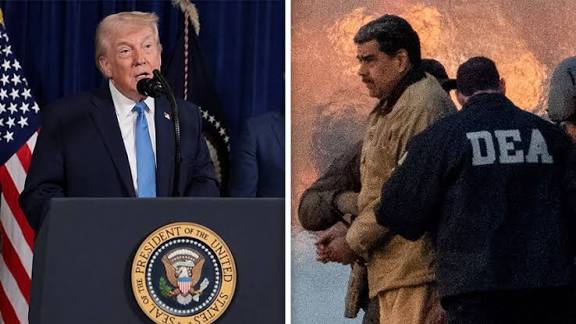
From this framework emerged the debate between offensive realists, who argue that states must constantly maximise power to survive, and defensive realists, who insist that excessive power-seeking provokes counterbalancing and ultimately reduces security. The tragedy for leaders like Venezuela’s Nicolás Maduro is that they behave like offensive realists without the material power to sustain offence, and like defensive realists without the alliances that make defence credible.
Because the international system is anarchic, states adopt predictable survival strategies. Some balance by forming alliances against perceived threats, as Ukraine attempted to do in response to Russia. Others bandwagon with stronger powers to avoid punishment, as seen in the asymmetric but mutually beneficial relationship between Israel and the United States. Many hedge by keeping relations open with rivals while preparing for conflict, a strategy visible in China’s approach to the United States. Others pass the burden of confrontation to third parties, as Britain and France did in the 1930s when they effectively passed the buck to the Soviet Union in the face of Nazi Germany. These strategies are not moral choices; they are responses to fear. Realists understand that states do not choose strategies based on justice, but on vulnerability. This is why moral outrage alone rarely alters outcomes.
There is a name for the persistent mistrust that exists even among friendly states. When one state takes steps to make itself safer, others feel less safe and respond in kind. No one needs to harbour aggressive intentions for conflict to emerge. In a world where intentions cannot be verified, the accumulation of power by one actor inevitably generates anxiety in others. Arms races, alliance formation, and eventual conflict often follow. This phenomenon is known as the security dilemma. Maduro speaks as though loudly invoking injustice will restrain power, but realism teaches the opposite lesson: unreciprocated vulnerability invites coercion.
History reinforces this lesson. Between 1799 and 1815, Napoleon Bonaparte was a menace to Europe. He crushed continental powers, dismantled the Holy Roman Empire, reorganised Europe into client states, installed loyal rulers, extracted resources, and attempted to cripple Britain economically through the Continental System. These were peoples of shared race and, in many cases, shared religion, yet cultural proximity offered no protection. Power dictated survival.
This is the delusion realism saves us from: the belief that identity, shared values, or sentiment can substitute for power. Europe learned painfully that domination provokes resistance. When Napoleon was ultimately defeated by a coalition of European powers, most famously at Waterloo in 1815, the Concert of Europe emerged as an attempt to cooperate, balance one another, and prevent the rise of another hegemon. It worked briefly. Then came the First World War. Then the Second. The third, history reminds us, remains possible.
The United States rose to global dominance after the Second World War not merely through military might. Europe lay in ruins, and America possessed unmatched industrial strength, financial capacity, and ideological appeal. The message of the 1956 Suez Crisis was unmistakable. Britain and France, once imperial giants, invaded Egypt to seize the canal but were forced to withdraw under pressure from the United States and the Soviet Union. The era of old empires acting independently was over. A new bipolar order had asserted itself.
When that bipolar order ended in 1991, the United States entered a unipolar moment. This explains why, in the early 2000s, many states went along with American decisions during the so-called war on terror: they lacked the capacity to block them. Yet realism predicts that unipolarity is inherently unstable. Power always invites balancing. While the George W. Bush administration drained American resources, attention, and legitimacy in Afghanistan and Iraq, China expanded its economic and technological might, and Russia recovered politically and militarily under Vladimir Putin. So emboldened was Moscow that Putin openly declared the invasion of Iraq proof that the myth of a unipolar world had collapsed. That war distracted the United States and effectively greased the rails for a more multipolar order.
The true tragedy, however, is not that the United States cannot be stopped. It is that having long positioned itself as the moral police of competing great powers, its own contradictions now provide rivals and even allies with justification to question its authority. This is how norms decay. The United States cannot stop China or Russia on their own turf or within their immediate spheres of influence for some obvious reasons. They have the capability to bring the world to its knees, and that’s because power has diffused, and the masks have fallen.
The post-Venezuela invasion era would be marked by a deep trust deficit, one in which the hurried citation of international legal provisions would be met with scepticism, and where each power would feel compelled to retreat, recalibrate, and balance against prevailing threats. What kept the United States dominant for decades—and why European states such as the UK have functioned as its offshore balancers—was never only bombs and bases; it was also soft power: its alliances, institutions, culture, credibility, and the belief that American leadership, however flawed, was preferable to the alternatives.
What we will witness in the wake of Venezuela’s crisis is realism’s sobering lesson unfolding: weaker states will bandwagon towards stronger patrons to avoid punishment. Some regional actors will gravitate towards Washington. Some will hedge, sustaining rhetorical defiance while keeping economic and diplomatic channels open. Some will attempt balancing, seeking regional or extra-regional partners to offset American influence, even if such efforts prove untenable in the short term. Some will engage in buck-passing, hoping external powers or multilateral institutions absorb the costs of confrontation. None of these responses will be driven by morality or outrage. They will be strategies of survival in an anarchic system. This brutally confirms the realist insight that when power sheds its soft edges, states respond with calculation. Not with solidarity.