New group seeks massive votes for Oyebanji, begins rural, urban campaign
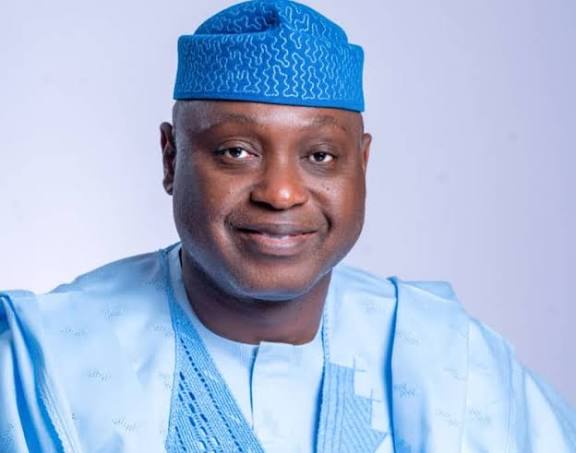
The newly launched South West Independent Campaign Movement, (SWICAM) has said it is working hard to ensure 1.5million votes for the All Progressives Congress, APC candidate and State Governor Biodun Oyebanji in the coming gubernatorial election. The group said such a feat is possible if non-party strategy of campaign is employed to galvanise the people across the 177wards in the state.
The group on Thursday said the entire South West has the second largest number of voters in Nigeria and in a position to secure 15 to 20millon votes from the region if the people are effectively mobilised. It however regretted that voter’s apathy in the South West is the highest in the country.
‘We are set to change the voting culture in the South West. We are using non-party volunteers, speaking to teachers, meeting peasants on their farms, meeting students in high and higher institutions, market women and men, while professional organisations and the young and the aged are not left out,’ the communique issued at the end of the Congress in Ado-Ekiti signed by group’s National Coordinator Suleiman Olubayo and Mr Fred Ojinika and Idris Abukar representing the Niger Delta and Northern communities in the South West respectively stated.
The group at its maiden congress at Ado Ekiti, the Ekiti State capital said it would use Ekiti State as the starting point towards a new, conscious voter’s culture in the South West. Over 500 delegates from across the South West, Kwara, Kogi, Delta and Edo Statwes attended the historic event. The group said Ekiti alone with a population of over 4million people is in a position to produce 1.5million votes for the All Progressives Congress, (APC) candidate and Governor of Ekiti State, Biodun Oyebanji. The communique issued after the congress, the group said the volunteers recruited to campaign in Ekiti are young people who will move from one community to the other not just talking to the people but acting like evangelists with Information, Education and Communication Materials.
‘We have embarked on a revolutionary campaign. The difference is that the campaign is not led by the APC but by non-party members who are concerned about the need to preserve democracy against military intervention, sustain power shift to the South and to support the on-going efforts at restructuring the country which the APC had started.
It listed such efforts which were never achieved in the 16 years of Peoples Democratic Party, (PDP)
rule as Railway and Electricity now on concurrent list, initiation of state police, the establishment of the South West Development Commission, (SWDC) and the ongoing process towards the establishment of State police. The group described the efforts as ‘fundamental intervention to secure the most important pillar of democracy which is self determination.’ It warned that a return to PDP or African Democratic Congress, (ADC) would spell doom for Nigeria.
In the communique, the group said it is specifically mobilising the entire South West for the All Progressives Congress, (APC) based on the fact that the APC leaderships in the region are the last remnants of progressives which have been decimated for many decades first by the military and later by the reactionary that took over power at the centre in 1999.
‘SWICAM has the mandate to mobilise the people for popular votes for Oyebanji. We want his victory to be total and overwhelming. We are also sensitising the people of the South West on the current power shift while at the same time putting them on their toes to galvanise the masses against coups.’
It said in the communique that ‘the SWICAM is driven by the principle that voting strength influences power and positions. The South West are the most educated people in Nigeria.
The South West has one of the fasted growing population in the country. The region provide sanctuary for many displaced people from across the country while many including those from West Africa and the Sahel are seeking economic sanctuary in the region which is now redrawing the political map.’ polulation growth in Nigeria. The region has the capacity to determined the power equation in Nigeria is properly mobilised.’
SWICAM said it will written personal letters to all the 151 traditional rulers in Ekiti State, while communication tools have been developed specifically for all teachers, traders, civil servants, peasants, farmers, primary, secondary and university principals and students, professionals, traders, hunters and even rural goldsmiths while information materials were also produced to Igbo, Northerners and people from the Niger-Delta living in Ekiti State.
The group said ‘Personal communication give people a deep sense of belonging. It establishes a bond of friendship and recognition. This is something Ekiti people value a lot.’
In conclusion, the South West Independent Campaign Movement, (SWICAM) according to the communique has come to create a paradigm shift. The organisation is made up of volunteers that want to change the tradition of low voters’ turnouts in the Old Western Region. The strategy is to engage the people as an independent group moving from one community to the other, engaging community-based, professional, artisan and peasant groups across the South West to ensure massive turn out in June 2026 and beyond.
‘We are here to endorse this great initiative being launched in Ado-Ekiti today. We have started with a major step forward using Ekiti as the case study. This intervention is bound to radically change the electoral strength of the South West in a way that will ensure voting strength reflect the huge population of the region.’ Speaking at the event, the Guest Speaker, Adewale Adeoye, a journalist said political parties have the false impression that dancing and singing in rallies represent constructive engagement with the people. He listed elements of popular campaign and mobilisation to include the following:
Poor campaign mechanism: In the South West campaigns are often driven by party members alone. Most of the time the party members restrict themselves to their constituencies. This means that the party keeps talking to itself without making attempts to cultivate fresh voters.
Political parties often believe that the voters are not interested in ideas. There is the wrong notion that voters prefer financial tokenism than serious intellectual engagement with the people. This is a costly mistake. The truth is that while some voters may not be interested in the policies and programmes of political parties, it is wrong to assume that this represents the dominant view.
The South West are largely educated, intelligent and enlightened. They want to be engaged, they want to know what politicians have in stock for them. Teachers, civil servants, workers, peasants and artisans are highly organised people along professional lines, associations and in communities.
There is a huge potential for revolutionary mobilisation of voters in ways that would upturn the table in favour of the canvassers.
Rallies have become ceremonies with dances, music, drums and carnivals. This is expected to automatically turn into votes. This is another fatal error. Mobilising the masses to vote goes beyond carnivals. It involves messaging, clear thoughts about past, present and future plans for the people. This attitude needs to change for political parties to be able to galvanise the people towards mass outing on election day.
Failure to engage leaders of strategic groups, community based associations and professional unions. While occasionally leaders of political parties engage professional bodies, they do so haphazardly through sharing of goodies without contractual relationship with such organisations. There are some 5,345 organisations, community-based groups and associations in the South West. These organisations hold meetings, have a strong communal and blood-bound relationship. Unfortunately, political parties do not have data of these strategic organisations talk less of engaging them.
Political parties also lack a clearly defined STRATEGY FOR MOBILISATION. This requires having Secretary for Mobilisation and Secretary for Organisation, two very key positions what the party rely on to bring into the party fresh members; the officials visit rural, urban, inter-personal and collective relationship. The Secretary for Mobilisation is usually the field officer that takes his or her job as a full time enterprise, He does not wait for election season before be begins to mobilise the masses and enlists them for popular participation.
He keeps a record of old and new members, he goes out daily with his team, has a short term, medium and long term strategy of mobilising the people with a comprehensive register of old and new members. Secretary for Mobilisation is usually a trained field man knowledgeable in mass communication skill whose tongue is compelling.
Inadequate voting units is also a challenge while the lack of e-voting is a difficulty the country needs to resolve. Ekiti State needs to engage Independent Electoral Commission, (INEC) to deal with the sparse allocation of polling units in Ekiti so that polling units would not be more than 300 meters away from every voter. In some places in the South West, voting goes on until 8pm simply because the units are not adequate compared with the population.