How a Smaller Fulani Army Conquered Larger Hausa States: Answers to the Questions History Forgot to Teach
Below is a very useful material for military training in Tactics and Strategy, and a key to understanding why the Fulani are currently attacking Middl Belt, Yoruba rural areas, farms, chasing away farmers, surrounding our villages and cities, forcing us into concentration in a single whole, to be encircled and crushed. We shall win if we understand there is real danger and also prepared ourselves useful material for military training in Tactics and Strategy, and a key to understanding why the Fulani are currently attacking Middl Belt, Yoruba rural areas, farms, chasing away farmers, surrounding our villages and cities, forcing us into concentration in a single whole, to be encircled and crushed. We shayll win if we understand there is real danger and also prepared ourselves
By Khaleed Yazeed
Katsina
The Question That Haunts Our History
Anyone who studies the Fulani jihad of 1804-1810 eventually asks the same question: how did a smaller Fulani army defeat the larger, better-established Hausa city-states? The Hausa had walls that stretched 13 miles. They had cavalry that had dominated the region for centuries. They had wealth from trans-Saharan trade. They had kings who traced their lineage back 800 years. And yet, within a decade, Kano fell, Katsina fell, Zazzau fell, Gobir fell. How?
The answer is not simple, but it is clear. And it is essential for understanding not only our past but also our present struggle for liberation. Let me answer the questions that history forgot to teach.
Question One: Was the Fulani army actually smaller?
Yes, in terms of total population, the Fulani were a minority in Hausaland. But an army is not a census. The Fulani did not rely only on ethnic Fulani soldiers. They recruited aggressively from disaffected Hausa peasants, from slaves who were promised freedom, from marginalized groups who had grievances against the Hausa kings. The core of the army was Fulani, but the ranks swelled with those who saw the jihad as an opportunity for social mobility. A small core army plus a large pool of opportunistic recruits can defeat a larger but unmotivated standing army. Numbers alone do not determine victory.
Question Two: Did the Fulani have better weapons or tactics?
The Fulani did not have guns in any significant number at the start of the jihad. What they had was superior cavalry tactics and, more importantly, a strategy of siege warfare. Instead of meeting Hausa armies in open battle where numbers would favor the defenders, the Fulani surrounded cities, cut off supply routes, and waited. Starvation is a weapon that does not require numerical superiority. Katsina fell after a seven-year siege, not because the Fulani breached its 13-mile walls, but because the people inside ran out of food. Carrion birds, lizards, and snakes were sold at exorbitant prices. Mothers watched their children waste away. The Fulani did not need to be more numerous. They needed to be more patient.
Question Three: Did the Fulani have intelligence advantages?
This is the factor that history books often overlook. The Fulani had lived among the Hausa for centuries as herders, traders, and clerics. They knew the layout of every city. They knew the weaknesses of every wall. They knew the rivalries between every king. They knew which Hausa nobles could be bribed, which generals could be turned, which peasants were angry enough to rebel. This intelligence network was built over generations, not assembled overnight. When the jihad began, the Fulani were not strangers invading a foreign land. They were insiders who knew exactly where to strike and who to recruit.
Question Four: Did the Fulani exploit divisions within Hausa society?
Absolutely. The Hausa city-states were not a unified nation. Kano and Katsina competed for trade dominance. Gobir was frequently at war with its neighbors. The Fulani exploited these rivalries, negotiating separate peaces, attacking when allies were distracted, and turning Hausa factions against each other. More importantly, they exploited class tensions. The Hausa kings were often unpopular, imposing heavy taxes and maintaining large standing armies that drained the peasantry. The Fulani presented themselves as reformers who would reduce taxes, purify Islam, and create a more just society. Many Hausa peasants and even some slaves believed them. They joined the jihad thinking they were fighting for their own liberation. They did not realize that they were fighting to exchange one set of masters for another.
Question Five: What role did religion play?
The Fulani framed the jihad as a religious war against corrupt, syncretic Muslim kings. This framing had two advantages. First, it attracted religious zealots who were willing to fight and die for what they believed was a holy cause. Zealots fight harder than mercenaries. Second, it demoralized the Hausa defenders. Many Hausa soldiers were not sure if they were fighting on the right side. Their kings practiced Islam mixed with traditional beliefs. The Fulani clerics accused these kings of being infidels. When a soldier doubts whether his commander is truly a Muslim, his will to fight crumbles. The Fulani understood that wars are won not only with swords but also with the conviction that God is on your side.
Question Six: Why did the British later support the Fulani instead of the Hausa?
This is a question that reveals the true nature of colonialism. The British did not come to Nigeria to liberate anyone. They came to extract value. By the time the British arrived in force in the early 1900s, the trans-Saharan slave trade was declining, and the industrial revolution was demanding new commodities: groundnuts, palm oil, rubber, tin. The British needed peace, not peace for the Hausa people, but peace for the railways, the mines, the plantations. They looked at the Fulani emirate system and saw efficiency. One Fulani emir could control a million Hausa subjects. One emir could collect taxes, maintain order, and deliver groundnuts to the railway station. The British provided weapons and legitimacy. The Fulani provided obedience and information. That alliance, forged in 1903, has never been broken. It is why today a Fulani man can be president and a Fulani man can be a bandit, but a Hausa man can only be a farmer, a victim, or a “tribalist” when he complains.
Question Seven: Did the Fulani deliberately destabilize Hausa society to make conquest easier?
Yes. Instability is a weapon. A destabilized opponent cannot organize. A hungry population cannot revolt. A people who do not know their history cannot reclaim their future. The Fulani burned the libraries of Katsina and Kano, erasing centuries of Hausa scholarship. They burned the historical records, so that future generations would not know that Hausa kings once ruled without bowing. They destroyed the town of Dankama where the Hausa king of Katsina took refuge. They assassinated Sultan Muhammad Alwali II of Kano, the last Hausa king, ensuring that no rallying point for resistance remained. Every act of erasure was deliberate. Every burned manuscript was a calculated blow against Hausa memory. The Fulani understood that a people who cannot read their own history cannot resist their own oppression.
Question Eight: Can the Hausa still liberate themselves after two centuries of subjugation?
This is the question that matters most. The answer is yes, but not through violence alone, and not through isolation. No revolution succeeds in isolation. The Hausa cannot liberate themselves while the Middle Belt is still bleeding from Fulani slave raids, while the Yoruba are still divided by political manipulation, while the Igbo are still recovering from the wounds of the civil war, while the Niger Delta is still drowning in oil extracted by foreign companies with Fulani collaborators. A Hausa revolution that does not build alliances is not a revolution. It is a rebellion, and rebellions are crushed.
But a revolution that unites every oppressed nationality in Nigeria, the Hausa who cannot be emirs, the Middle Belt whose ancestors were depopulated, the Igbo who still carry the scars of Biafra, the Yoruba who know what Awolowo could have been, the Niger Delta whose environment has been poisoned, that revolution cannot be stopped. The Fulani-British alliance has lasted for over a century because the oppressed have been fighting alone. When they fight together, the alliance will crumble.
Question Nine: What kind of revolution do we need?
The word “revolution” frightens people. They imagine violence, chaos, civil war. But a revolution is simply a drastic change in the nature of governance. Had Aminu Kano succeeded decisively in his political movement, that would have been a revolution. Had the Hausa people voted as a bloc for their own interests, that would have been a revolution. Had the Middle Belt formed a political alliance with the Hausa and the Igbo and the Yoruba to break the Fulani-British grip on power, that would have been a revolution. Revolution is not always violent. Sometimes it is just a people deciding to stop bowing.
The revolution we need is a revolution of consciousness, of political organization, of strategic voting, of economic pressure, of cultural reclamation. It is the revolution that teaches Hausa children that their ancestors built walls, not that their ancestors bowed. It is the revolution that demands a Hausa emir in Kano, not because we hate Fulani, but because we love ourselves. It is the revolution that builds alliances across the Niger, the Benue, and the Delta, because we understand that no one is free until everyone is free.
The Final Answer
The Fulani conquered the Hausa not because they were divinely chosen, not because they were morally superior, not because the Hausa deserved to be conquered. They conquered because they had better intelligence, better strategy, and the willingness to use hunger as a weapon. They conquered because they exploited divisions within Hausa society and framed their conquest as a holy war. They conquered because the British later found them useful as instruments of colonial extraction.
But conquest is not permanence. The walls of Kano still stand. The Gobarau Minaret still stands in Katsina. The Gidan Korau palace still stands. The memory of Hausa kings, though burned and buried, still lives in the stories that grandmothers whisper to their grandchildren. And a people who remember cannot be conquered forever.
We are not asking for vengeance. We are asking for the right to be Hausa. Not Hausa-Fulani. Just Hausa. Just a people who once ruled themselves and wish to do so again. That is not a rebellion. That is a homecoming.
Let the answers to these questions spread far and wide. Because the first step to liberation is knowing the truth. And the truth is, we were conquered by strategy, not by destiny. And what was done by strategy can be undone by strategy.
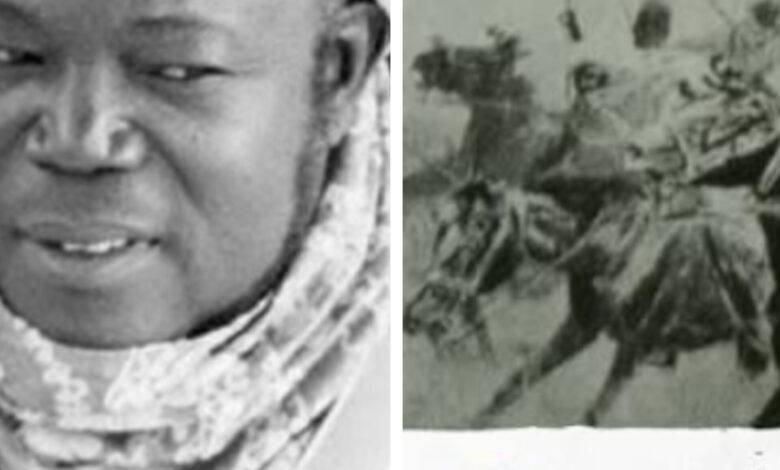
“Please note that I am not the copyright holder of the picture accompanying this article. I have used it solely to illustrate and support the historical discussion herein. If you are the rightful owner and have any concerns, please contact me, and I will gladly give proper credit or remove it.”
Khaleed Yazeed
Founder, Wakilin Yamma Youth Development Network
Katsina State, Nigeria