Major Newsbreak: FG loses control over States’ waterways
By Moses Ikusagba
The Federal Government no longer has any power to control waterways in States, the Supreme Court has ruled.
In a major ruling that pushes forward the prospect of restructuring of Nigerian heavily contralised political-economy, the apex Court striped the central government of control which the Federal authority had enjoyed for many decades.
Observers see the ruling as a major step towards Federalism.
In the 5-2 split Judgment, the Supreme Court altered a major structure of the Nigerian state and the country-s maritime legal template.
The Supreme Court ruled that the Federal Government has no right to regulate inland waterways located in the borders of any of the 36 States of the Fedeation
The control of state waterways by the Federal Government had ib the past been used to undermine local authorities and the ancestral rights of indigenous people denying them access to what God gave to them.
” This is a very good decision. It shows clearly that we have been living a false life imposed on Nigerians by the military. Its a victory for indige ous people in Nigeria. It affirms their ancestral economic and even spiritual rights,” Chief Segun Ajibulu of South West Professional Forum, [ SOWPROF] told Irohinoodua.
By revoking Sections 12 and 13 of the National Inland Waterways Authority (NIWA) Act, the court the Supreme Court put an end to decades of Federal Government overlord on waterways that should be owned by States
The Supreme Court said the Federal Government by retaining control over State Waterways stripped states of their right over what naturally belonged to them undermining the kernel principle of Federalism.
The Court which decisions are final said the Federal Government should not deny states their rights over acquatic and maritime resources.
The Supreme Court issued a perpetual injunction restraining the federal government from dealing with lands adjoining waterways within Lagos State and other states of the federation for non-navigational purposes
Coastal states like Lagos, Bayelsa, Ondo, Rivers, Edo, Delta are expected to be chief beneficiaries of the new ruling while it is expected to favour Anambra, Kogi, Benue, Kwara and Bornu which border the Nigerian aspect of Lake Chad basin.
The ruling means the states can no develop local framework for fisheries, water transportation and harvest of other aquatic resources.
It may also increase the potential of states to explore other natural resources including oil and gas.
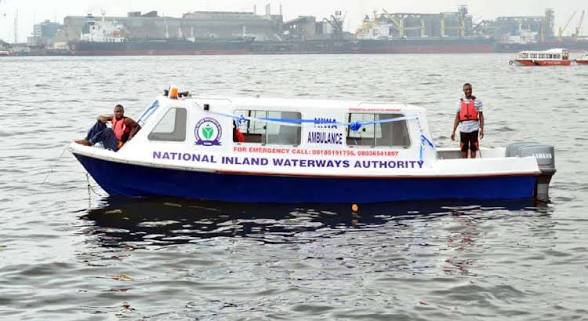
The legal fireworks began when the Lagos State Waterways Authority (LASWA) took Nigerian Inland Waterways Authority, [NIWA] to court over ferry licensing and revenue collection.
The Lagos State Government had argued that states should be mandated by law to manage their
water transportation without Federal lordship.
Earlier Judgment in 2024 had favoured the Federal Government before the appeal by the Lagos State Government.
States that joined Lagos in the suit against the Federal Government were Bayelsa, Akwa Ibom, Ogun, Cross River, Kaduna, Enugu, Ebonyi, Ekiti, Benue, Rivers, Osun, Oyo and Anambra.
The legal team against the Federal Government was led by former Lagos State Governor, Babatunde Raji Fashola SAN, Olasupo Shasore SAN, and Muiz Banire SAN.
The legal team of the Federal Government was led Akin Olujinmi SAN.
The seven-member panel of the court was led by Justice Mohammed Lawal Garba.Others in the panel are Justices Garba, Emmanuel Akomaye Agim, Chidiebere Nwaoma Uwa, Haruna Simon Tsammani, Stephen Jonah Adah, Abubakar Sadiq Umar and Mohammed Baba Idris.
Justice Umar read the lead judgment.
The Judges all did not agree on the constitutionality of Sections 10 and 11 of the NIWA Act. Justices Agim and Idris dissented.