
FG names Simon Ekpa, 47 others as terrorism financiers
By Samuel Ogunsona
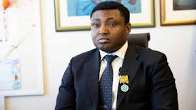
The Federal Government of Nigeria has name Finland based leader of Indigenous Peoples of Biafra, [IPOB] and 47 others as financiers of terrorism.
The list, published by the Nigeria Sanctions Committee (NIGSAC), and made available to Irohinoodua included prominent figures such as Simon Ekpa, a Finland-based separatist leader linked to the Indigenous People of Biafra (IPOB), Tukur Mamu, a Kaduna-based publisher accused of supporting terrorist groups.
While Nigeria categorised IPOB as a terrorist organisation, many countries especially in Europe and America see IPOB as a self-determination group committed to the political and economic freedom of the Igbo South East.
Others named are Abdulsamat Ohida, Mohammed Sani, Abdurrahaman Abdurrahaman, Fatima Ishaq, Yusuf Ghazali, Abubakar Muhammad, Sallamudeen Hassan, Adamu Ishak, Hassana Isah, Abdulkareem Musa, Umar Abdullahi, Bashir Yusuf, Ibrahim Alhassan, Salihu Adamu, Surajo Mohammad, Fannami Bukar, Muhammed Musa, Sahabi Ismail, Mohammed Buba, Adamu Hassan, Hassan Mohammed, Usman Abubakar, Kubara Salawu and Rabiu Suleiman.
Those named from the South-East region included Simon Njoku, Godstime Iyare, Francis Mmadubuchi, John Onwumere, Chikwuka Eze, Edwin Chukwuedo, Chiwendu Owoh, Ginika Orji, Awo Uchechukwu, Mercy Ali, Ohagwu Juliana, Eze Okpoto, Nwaobi Chimezie and Ogumu Kewe.
Nigeria has been grappling with persistent security challenges for over a decade, particularly in the North-East where insurgent groups remain active.
The country has also witnessed a surge in banditry in other regions, including the South-West, where states like Ondo and Ekiti have reported cases of kidnapping and killings.
The security situation in the region has been further exacerbated by the activities of terrorist groups, which have exploited the porous borders and weak security infrastructure to launch attacks on civilians and security forces.
The release of the sanctions list is a clear indication of the government’s commitment to dismantling financial networks that support terrorism.
The move is expected to trigger further investigations and enforcement actions by security and financial regulatory agencies, and could lead to restrictions on financial activities and asset freezes for those named on the list.
According to security analysts, targeting funding channels is a critical component of counter-terrorism strategy, as it disrupts recruitment, logistics, weapons procurement, and operational planning.
The Nigerian government has increasingly focused on financial intelligence, surveillance, and sanctions as tools to weaken terrorist networks.
The inclusion of individuals based outside Nigeria, such as Simon Ekpa, shows the transnational nature of modern security threats and the growing importance of international cooperation.
Nigeria’s efforts to combat terrorism financing are expected to be supported by international partners, including the Financial Action Task Force (FATF), which has identified the country as a high-risk jurisdiction.