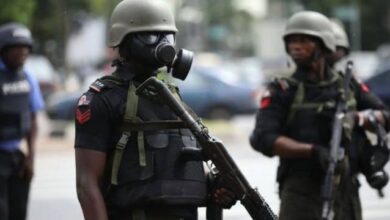
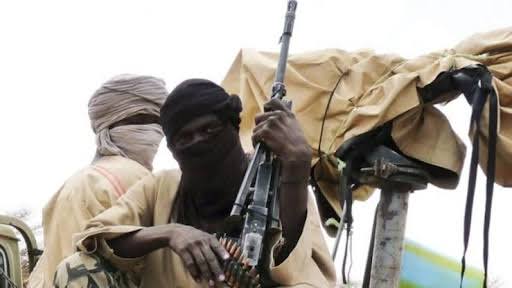
US says 30,000 armed Fulani militants behind violence in Nigeria
Warns of more violence
By Ahmed Babatunde
The United States has said that some 30,000 armed Fulani terrorists are responsible for violence in Nigeria.
This figure is up to the population of soldiers in some countries.
Experts say it represents close to a third of the total Nigeria Army fighting force
This is not to talk of the fighting force of the Boko Haram and other terrorists group ,operating within Nigeria which may be close to another fifty thousand
The report was made
available to Irohinoodua on Wednesday suggesting that the Yoruba South West may be dealing with close to 15,000 heavily armed terrorists in her territories signalling a major danger to security in the region.
The United States Commission on International Religious Freedom, USCIRF, in the newly released report said an estimated 30,000 armed Fulani militants are dispersed across Nigerian territories.
The reports said the large number worsen insecurity and religious freedom violations across Nigeria.
This is coming on the heels of various cases of kidnapping across Nigeria the latest being the kidnapping of 46 pupils and teachers at a community school in Isiele, Oyo State.
The report was titled “Nonstate Violators of Religious Freedom in Nigeria: Fulani Militants.”
The report described the armed groups as “some of the deadliest non-state actors responsible for violent attacks across the Middle Belt and Southern Nigeria.”
The report said the armed nomadic have clusters of 10 to 1,000 fighters, which “carrying out coordinated assaults that have led to thousands of deaths, mass displacement and heightened religious tensions.”
USCIRF stated that attacks linked to Fulani militants accounted for the highest number of deaths among religious communities in Nigeria in the past year, surpassing casualties attributed to organised insurgent groups and criminal gangs.
The report said though Christians are chief targets, Muslims have also been victims.
The report stated that “Violence by Fulani militants caused the highest number of deaths among all religious communities in Nigeria over the last year compared to attacks by organised insurgent groups and criminal gangs.”
It said while the groups “lacked a central leadership structure, some factions occasionally collaborated with bandit networks and extremist organisations.”
It noted further that “These actors operate in a variety of contexts and with a multiplicity of likely aims and motivations,” the report said.
“While many Fulani militant groups wage independent attacks, others periodically coordinate with a wide range of actors, from conventional bandit gangs seeking financial enrichment to recognised terrorist organisations that espouse violent interpretations of Islam.”
USCIRF report observed that little protected or vulnerable communities remain prime targets.
It stated that “They often wield machetes and descend on vulnerable communities during the night, eliciting terror as a way to force victims to quickly leave and to achieve greater control of desired land.”
According to the report, thousands of people have been killed by the armed groups with millions displaced.
“Militant actors have often carried out operations during Christian holidays such as Christmas or Easter to further maximise the psychological impact,” the report noted.
It noted that in February 2026, suspected Fulani militants killed at least 32 persons in Niger State and attacked Holy Trinity Parish in the Kafanchan Diocese of Kaduna State, killing three persons and abducting 11 others, including the parish priest, Father Nathaniel Asuwaye.
USCIRF said armed men abducted Muslim worshippers from a mosque in Plateau State in February 2026 and later demanded a ransom of N16 million while on Palm Sunday and Easter attacks in April 2026 led to many deaths in Plateau, Kaduna and Benue states.
“On Easter Sunday, Fulani militants reportedly killed five worshippers at two churches in Kaduna State while abducting 31 others,” the report stated.
It noted further “Victims have long reported that security forces are consistently slow to respond to attacks on their communities,” USCIRF stated.