Indigenous leaders set to present key positions at Geneva World summit
By Samuel Ogunsona
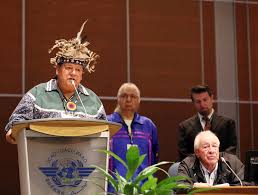
Indigenous leaders from all over the world are expected to speak in Geneva at a global conference on bio diversity.
Notably, the Members of International Indigenous Forum on Biodiversity (IIFB), will present their vital role in the implementation of the scheduled Global Biodiversity Framework at the ongoing twelfth Working Group on Article 8(j) (WG8j-12) on Monday.
Irohinoodua was informed that the twelfth meeting of the Ad Hoc Open-ended Inter-sessional Working Group on Article 8(j) and Related Provisions of the Convention is being held in Geneva from 12 to 16 November 2023.
Some of the International indigenous leaders that will be speaking during the conference includes Ramiro Batzin, Guatemala (LAC); Lucy Mulenkei, Kenya (Africa); Lakpa Nuri Sherpa, Nepal (Asia); Viacheslav Shadrin, Russia (Russia / Arctic); Ruth V. Spencer, Antigua and Barbuda (LAC); Aslak Holmberg, Finland (Europe / Arctic); Chrissy Grant, Australia (Pacific).
Speaking ahead of the meeting on Monday, the Co-Chair of the IIFB, Asia, Lakpa Nuri, said without the effective and inclusive participation of these communities, the Global Biodiversity Framework cannot succeed.
“As Indigenous Peoples, we have been custodians of our lands, territories and waters for millennia and have deep interaction with the ecosystems where we live. Evidence shows our lands are among the most biodiverse on the planet,”
However, The Framework – finalised at COP15 in December 2022 – has demonstrated a potentially transformative shift in environmental policymaking by recognising the intrinsic relationship between respecting human rights and addressing the biodiversity crisis. For the first time, the text requires all Parties to apply a human rights based approach in the implementation of the GBF.
The Co-Chair of the IIFB, Africa, Lucy Mulenkei, emphasized on the importance of Human right based groups for a successful global biodiversity framework.
“A human rights-based approach is crucial to a successful Global Biodiversity Framework”
“By respecting the territoriality of Indigenous Peoples, respecting our knowledge and our contributions, the Global Biodiversity Framework – including targets to ensure humanity lives in harmony with nature – will succeed!” Ramiro Batzin, co-chair of the IIFB, Latin America.