Segun Osoba: Historian, Humanist, and Activist
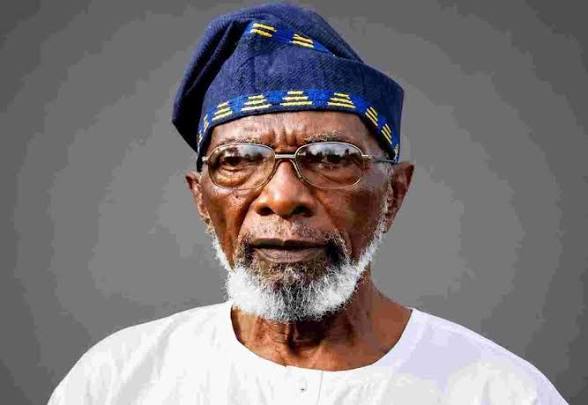
By Ibrahim Abdullah
Segun Osoba belongs to a generation of African scholars for whom historical writing was never merely an academic exercise.
His intervention as a historian emerged from a deep conviction that history had to illuminate the structures of domination shaping African societies and, in doing so, contribute to human emancipation. In this sense, Osoba’s career connects scholarship, humanism, and activism into a single intellectual project. He stands within the tradition of radical African historiography associated with figures such as Walter Rodney, Archie Mafeje, Sheikh Anta Diop, and Yusufu Bala Usman, his friend and collaborator. Comrade Osoba’s contribution was distinctly rooted in the political economy of Nigeria and the crisis of the postcolonial African state.
Osoba emerged intellectually during the first decade of independence, when African historians sought to reclaim the continent’s past from colonial distortions. Earlier colonial historiography had either denied Africa a meaningful history or reduced it to the actions of imperial administrators and indigenous elites. Nigerian nationalist historians, precisely the Ibadan hegemons, challenged these assumptions by recovering African agency and reconstructing pre-capitalist political systems, trade networks, and resistance movements. Osoba’s generation pushed the critique further. For him, the problem was not simply colonial misrepresentation but the failure to analyze the material foundations of power. He argued that nationalism, ethnicity, and political conflict in Nigeria could only be understood through the dynamics of class formation, uneven development, and state power.
This orientation reflected the influence of Marxian political economy and anti-imperialist thought. Educated partly in the Soviet Union, Osoba brought historical materialism into Nigerian historiography not as dogma but as a method for explaining the relationship between economic structures and political domination. His work consistently examined how dependent colonial capitalism transformed social relations and how the postcolonial ruling class inherited and reproduced those structures. In essays on the Nigerian bourgeoisie, nationalism, and elite factionalism, he insisted that ethnic and regional conflicts were often expressions of competition among fractions of the ruling class rather than primordial antagonisms. This was an important intervention in Nigerian public discourse, which frequently treated ethnicity as an eternal cultural fact detached from political economy.
As a practicing historian, Osoba helped reshape the intellectual culture of the former University of Ife, now Obafemi Awolowo University. The so-called “Ife School”—Osoba didn’t think an Ife school existed— became one of the principal centers of radical historical scholarship in Nigeria. There, history was treated not as antiquarian reconstruction but as a critical social science capable of exposing the contradictions of colonialism/neocolonialism. Osoba’s scholarship contributed to a broader movement that challenged conservative nationalism and interrogated the class character of the African postcolonial state. His work encouraged historians to examine labor, peasant struggles, underdevelopment, and the ideological function of state institutions.
Yet Osoba’s significance lies not only in the arguments he made but also in the ethical orientation of his intellectual life.
His Marxism was inseparable from a deep humanism. He approached history as a means of defending the dignity and agency of le menu peuple whose experiences were often erased from official narratives. His attention to workers, peasants, and marginalized groups reflected a broader commitment to social justice. Unlike technocratic or purely academic scholarship, Osoba’s writing carried a moral insistence that historical understanding should serve emancipatory ends.
This humanist orientation shaped his praxis as an activist. Osoba belonged to a generation of African intellectuals who understood the university as a political space and the scholar as a public actor. He participated in radical debates about military rule, authoritarianism, corruption, and dependency in Nigeria. Like many left intellectuals of his era, he viewed silence in the face of injustice as a betrayal of the responsibilities of scholarship. His refusal to separate academic work from political commitment made him part of a wider African tradition in which intellectuals were expected to intervene directly in public life.
Importantly, Osoba’s activism was not reducible to party politics or ideological slogans. His praxis was grounded in critical inquiry and democratic engagement. He recognized the limitations and failures of postcolonial nationalism, especially the emergence of a predatory ruling class that appropriated the language of liberation while deepening inequality and repression. In this respect, his work anticipated later critiques of the African postcolonial state. He showed how nationalist elites often reproduced colonial structures of accumulation and governance, thereby frustrating the emancipatory aspirations of independence.
His historical method also challenged deterministic readings of Marxism.
Although deeply influenced by class analysis, Osoba did not reduce history to economics alone. Rather, he emphasized the interaction of ideology, culture, and political struggle within material conditions. His writings on nationalism and liberation movements paid close attention to intellectual debates, political organization, and popular consciousness. This sensitivity to human agency gave his work a distinctly humanist texture, distinguishing it from more rigid forms of structural analysis.
Osoba’s enduring relevance lies in the fact that many of the contradictions he analyzed remain unresolved. Contemporary Nigeria continues to wrestle with elite capture, deep social inequality, ethnic mobilization, and crises of democratic legitimacy. His insistence that these phenomena must be understood historically and materially remains intellectually powerful. At a moment when public discourse often collapses into ethnic essentialism or technocratic policy language, Osoba’s work reminds us that political crises are rooted in historically produced structures of power.
At the same time, his life offers a model of the engaged African intellectual. He refused the separation between scholarship and public responsibility, between historical inquiry and ethical commitment. His intervention as a historian was therefore inseparable from his activism and humanism. Through both his writings and his public engagement, Segun Osoba advanced a vision of history as a tool of critical consciousness — one capable not only of explaining the world but also of participating in its transformation.
I recall gifting him a pair of Birkenstock sandals when he retired from active combat at Ife in 1991.
Vintage Osoba, he wrote back to thank me for the gift but also to know whether I realise that he had already enrolled in the SS FOOT brigade.
When I visited him after I was illegally dismissed from the University of Sierra Leone in 2016 he advised me to stay in court by reminding me that all such cases in Nigeria were won by litigants.
Later in the evening after dinner he handed me an envelope containing 100 GBP and quietly but firmly told me that he won’t accept the envelop from me if I turn it down—he could afford it, he quietly assured me.
That envelop spent life in a disused jacket in my closet for almost three years.
It came from a man who had retired in 1991 at age 57 to take care of his aging mom.
Comrade Segun Osoba was the quintessential Omoluabi.