Europe partition of Africa as a Crime
By Prof Moyo Okediji
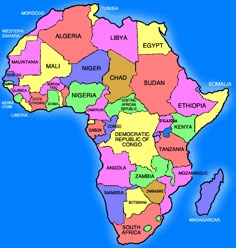
- The Partition of Africa
N
The partition of Africa accelerated after the Berlin Conference of 1884–1885, where European powers divided much of the continent among themselves without African participation. By 1914, nearly all of Africa had been brought under European colonial rule. - The Looting of Benin
The invasion of Benin was not a humanitarian intervention. It was an imperial operation designed to remove a sovereign African ruler, bring an independent kingdom under British control, and appropriate its wealth.
The seizure of thousands of artworks was not an accidental by-product of war but part of a broader colonial system that converted military conquest into economic and cultural profit.
In February 1897, British forces invaded Benin City, burned much of the royal capital, exiled Oba Ovonramwen, and removed thousands of royal and sacred objects now collectively known as the Benin Bronzes.
Many of these works remain in museums and private collections outside Nigeria.
- The Military Expedition
British naval and military forces mounted an expedition of approximately 1,200 troops against the Kingdom of Benin in February 1897.
The campaign ended with the occupation of Benin City and the seizure of royal treasures.
The looting of African art formed part of a broader colonial system that extracted labor, land, resources, and cultural heritage throughout the continent.
The Congo Free State under King Leopold II remains one of the most notorious examples of colonial exploitation.
For the moment, however, let us focus on Benin.
The looting of Benin did not begin when British troops entered the city in February 1897.
It began months earlier, with a plan.
In November 1896, British Acting Consul-General James Phillips proposed the removal of the Oba of Benin and suggested that the wealth of the kingdom could finance the operation.
Like many imperial powers of the nineteenth century, the British Empire pursued political and economic expansion through military force, commercial pressure, and colonial administration.
Benin’s wealth, strategic position, and control of regional trade attracted growing British interest.
The Kingdom of Benin was a prosperous civilization situated in a fertile tropical environment. Its agricultural resources, forest wealth, artistic traditions, and commercial networks supported a powerful state that had flourished for centuries.
To British officials and merchants seeking greater access to trade and resources, Benin represented both an obstacle and an opportunity.
The events that followed reflected these competing interests.
In January 1897, a controversial British mission advanced toward Benin City.
A month later, British warships and more than a thousand troops arrived.
What followed became one of the most consequential episodes of cultural destruction and artistic dispossession in African history.
Phase II: The Phillips Expedition (January 1897)
The crucial date is 4 January 1897, not 1 January.
Phillips and his party advanced toward Benin City despite warnings that the annual Igue ceremonies were underway and that the Oba could not receive visitors.
Near Ugbine, close to Gwatto (Ughoton), Benin forces attacked the expedition.
Phillips and most of his party were killed; only a few survived. British accounts later referred to the incident as the “Benin Massacre.”
From the Benin perspective, many chiefs regarded the British mission as a disguised invasion or reconnaissance operation.
Some evidence suggests that Oba Ovonramwen preferred to avoid conflict, while military leaders such as Ologbosere believed that war was imminent.
Phase III: The Punitive Expedition (February 1897)
The British invasion began on 9 February 1897.
A force of roughly 1,200 troops under Admiral Harry Rawson advanced on Benin City. After several days of fighting, the city fell.
The royal palace was looted, buildings were burned, thousands of artworks were seized, and Oba Ovonramwen was eventually captured and exiled.
The objects removed during the expedition were dispersed through auctions, museums, and private collections across Europe and North America.
Today, the Benin Bronzes remain at the center of international debates about restitution, cultural heritage, and the enduring legacies of colonialism.